November 18, 2026
Hyperparathyroidism Before SuperPATH: Bone Planning
If you have hyperparathyroidism and are considering SuperPATH hip replacement, your orthopedic consultation should include a review of your overall health and bone strength. Your diagnosis alone doesn't determine whether you're a candidate for surgery.
For any hip replacement, the surgeon needs enough stable bone to support the new components. Your fracture history, imaging, anatomy, and medical care all help shape that assessment.
Here's what to expect when we discuss bone health and a possible SuperPATH procedure.
Key Takeaways
- SuperPATH is a surgical approach to hip replacement. It doesn't strengthen bone or replace treatment for bone disease.
- Bone density is one part of the assessment. Previous fractures, bone shape, and the condition of the hip also matter.
- We consider how to secure the implant and reduce the risk of a fracture during surgery.
- Some patients benefit from additional bone health care before or after replacement.
- The safest approach and recovery plan depend on your individual needs.
Why Bone Health Matters for Hip Replacement
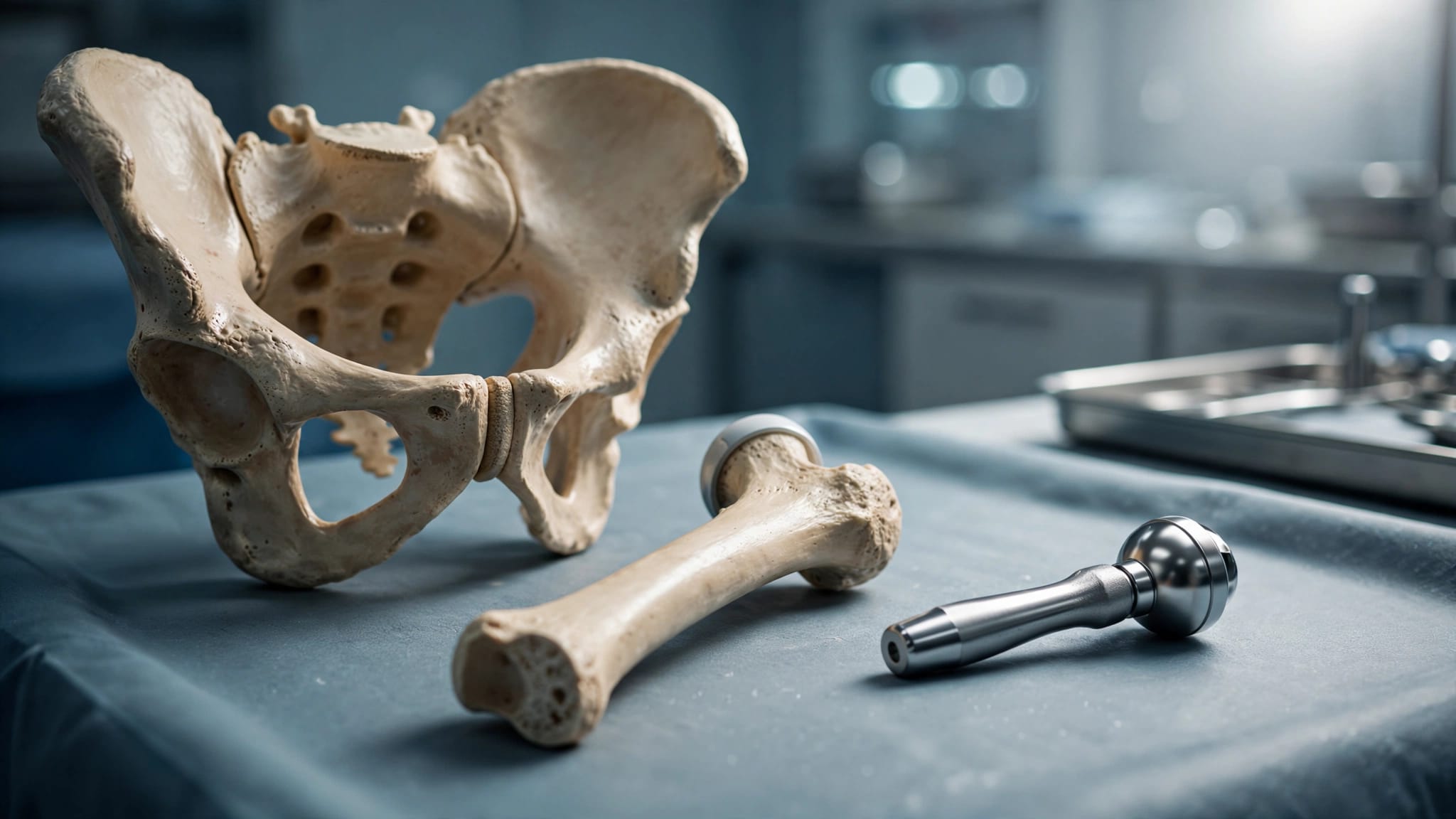
A hip replacement has two main components that need support from your skeleton. The cup sits in the pelvic socket, and the stem fits inside the upper thighbone, or femur. Both must remain stable as you recover and return to activity.
Weak bone can make implant placement more demanding. It may also increase the chance of a fracture during surgery or around the implant later. A fracture near a replacement is called a periprosthetic fracture .
Bone density and bone quality
A bone density test estimates how much mineral is present in certain bones. Lower density can be a sign that bones are more vulnerable to fracture.
Bone quality is a broader consideration. It includes the structure and condition of the bone supporting the implant. An imaging result helps us understand that support, but it doesn't describe every feature of the bone we encounter during surgery.
Your fracture history adds information
A broken wrist, vertebra, or hip after a minor fall can be an important sign of bone fragility. Tell us about the injury even if it happened years ago and has healed.
We also want to know about previous hip or femur surgery. An old fracture, altered bone shape, or existing hardware can change how we prepare for replacement.
What Happens During the Preoperative Assessment
We begin with your symptoms, walking ability, hip motion, medical history, and goals. If you have hyperparathyroidism, bring information about your diagnosis and care, along with a complete list of medications and supplements.
Your primary care clinician, orthopedic surgeon, and anesthesia team may each contribute to the evaluation. Our guide to medical clearance before hip replacement describes how those responsibilities can differ.
X-rays and bone density testing
Hip and pelvis X-rays show the joint, the shape of the bones, and visible changes such as arthritis or an old fracture. They also help us plan the size and position of the replacement components.
X-rays don't reliably measure bone mineral density. When a bone health assessment is appropriate, we may review a dual-energy X-ray absorptiometry scan, often called a DXA or DEXA scan. It commonly measures density at the hip and spine.
A prior scan can be useful, so bring the report if you have one. Your fracture history and examination still matter alongside the result.
Medical history and medications
We review conditions and medicines that can affect bone strength, anesthesia, or recovery. For example, long-term corticosteroid use is relevant because it can affect bone health. Previous osteoporosis treatment also belongs in the conversation.
Don't stop a prescription or supplement on your own before surgery. Your care team will explain which medications need a specific plan.
How SuperPATH Fits Into the Decision
SuperPATH is an approach to the hip joint used for total hip replacement. It is designed to limit disruption to certain muscles and soft tissues. The surgeon still replaces the damaged ball and socket, and the implant still needs dependable support.
The approach doesn't make weak bone stronger. It also doesn't eliminate the possibility of fracture or other complications associated with hip replacement.
Some people with osteoporosis can be candidates for SuperPATH. Others may benefit from a different approach that gives the surgeon more exposure or control. Our discussion of osteoporosis and SuperPATH options covers how bone strength fits into that choice.
We consider the shape of the femur and pelvis, the amount of bone available, previous surgery, and the condition of surrounding tissues. Severe deformity, extensive scarring, or prior hardware can make a limited-access procedure more demanding.
A safe plan also leaves room for the surgeon to adjust if the bone or anatomy differs from what the images suggested.
How Bone Strength Can Influence Implant Fixation
Fixation describes how the replacement components stay attached to bone. The method depends on the condition and shape of the bone, the implant design, and the reconstruction needed.
Cementless fixation
A cementless component is placed without bone cement. The surgeon relies on an initial fit, followed by bone growth into or onto the implant surface.
That initial stability matters. If the bone cannot support the component adequately, a different implant or fixation method may be more appropriate.
Cemented and hybrid fixation
With cemented fixation, the surgeon uses bone cement to secure a component. This may be an option when the femoral bone is less suitable for a cementless stem.
A hybrid replacement combines fixation methods, often with a cemented stem and a cementless cup. Neither method is right for every patient. We select components for the bone and anatomy involved, rather than choosing solely on the name of the surgical approach.
The plan may also change during the operation. For example, bone that appears more fragile than expected may call for a different strategy to obtain stable fixation. We discuss that possibility before surgery so you understand why flexibility matters.
When Bone Health Care May Affect Timing
Hip replacement is usually an elective procedure, so there may be time to address health concerns before scheduling it. When bone weakness or another medical issue needs attention, we can coordinate with your primary care clinician or a bone health specialist.
The timing decision also needs to account for your hip symptoms. Severe pain can limit walking and make daily activities harder. A delay may give the team time to address a concern, but it can also prolong a period of reduced mobility.
There isn't one waiting period that fits every patient. The discussion should cover what needs attention, who will manage it, and how that care fits with your hip replacement plan.
Other conditions can add to the assessment. For example, our article on bone quality in rheumatoid arthritis explains why inflammation and long-term steroid use may matter when planning a replacement.
Recovery When Bone Strength Is a Concern
Your recovery instructions depend on the stability of the implant, the operation performed, and what the surgeon finds during surgery. Many patients begin walking with assistance soon after hip replacement, but the amount of weight allowed on the operated leg can differ.
If your surgeon recommends a walker or cane, use it for the prescribed period. The device supports balance and helps reduce the chance of a fall while strength and confidence return.
Movement and rehabilitation
Physical therapy may focus on getting in and out of a chair, walking safely, and gradually building strength. Your therapist can also help you practice stairs if you need them at home.
Follow your own team's instructions rather than comparing your progress with another patient's. Pain, balance, and mobility can improve at different rates.
Preparing your home
Before surgery, clear loose rugs and clutter from walking paths. A stable chair and frequently used items within easy reach can make daily tasks more manageable.
Arrange help with transportation and household needs during the early recovery period. After surgery, contact your team promptly about a fall, sudden thigh or groin pain, or a new inability to bear weight. Seek urgent medical care if you cannot safely move or walk after a fall.
Questions to Bring to Your Consultation
A useful consultation should give you a clear picture of the proposed operation and the reasons behind it. Bring your imaging reports, fracture history, and medication list, then ask about the decisions that matter to you.
You might ask:
- What do my X-rays and bone health history show about support for the implant?
- Is SuperPATH a reasonable approach for my hip, and what might lead you to recommend another approach?
- Which fixation method are you considering, and what could change that plan during surgery?
- Who will coordinate any bone health care I need before or after replacement?
- Will my bone strength change my walking or weight-bearing instructions?
The answers should relate to your examination and health history. A good plan explains both the preferred approach and the options available if conditions in the operating room require a change.
Frequently Asked Questions
Does hyperparathyroidism automatically rule out SuperPATH?
No. A diagnosis alone doesn't determine your eligibility. We assess the hip, overall health, bone support, and the surgical access needed before recommending an approach.
Does a normal X-ray rule out weak bones?
No. An X-ray is useful for examining the hip joint and bone shape, but it doesn't reliably measure bone mineral density. Your medical history and, when appropriate, a DXA scan add information.
Can a patient with osteoporosis have a hip replacement?
Yes. Osteoporosis doesn't automatically rule out replacement or SuperPATH. It can affect the implant and fixation plan, as well as how the team manages fracture risk and recovery.
A Plan Built Around Your Hip
A SuperPATH consultation should look beyond the approach to the support your new hip will need. Bone density, previous fractures, and anatomy help us choose a safe surgical plan.
Bring your health records and questions to your appointment. Together, we can discuss your options and the steps that fit your needs.
ADDITIONAL ARTICLES