November 4, 2026
Acetabular Bone Loss and Hip Reconstruction Planning
Acetabular bone loss can change hip reconstruction when there isn't enough sound bone to hold a replacement socket securely. Depending on where the bone is missing and how much remains, a surgeon may use a different cup, add screws, or plan for grafts or other supporting components.
The goal is stable fixation : a socket implant that has dependable support in the pelvis. Understanding the shape and extent of the damage helps explain why one person's operation may differ from another's.
Why socket bone matters in hip replacement
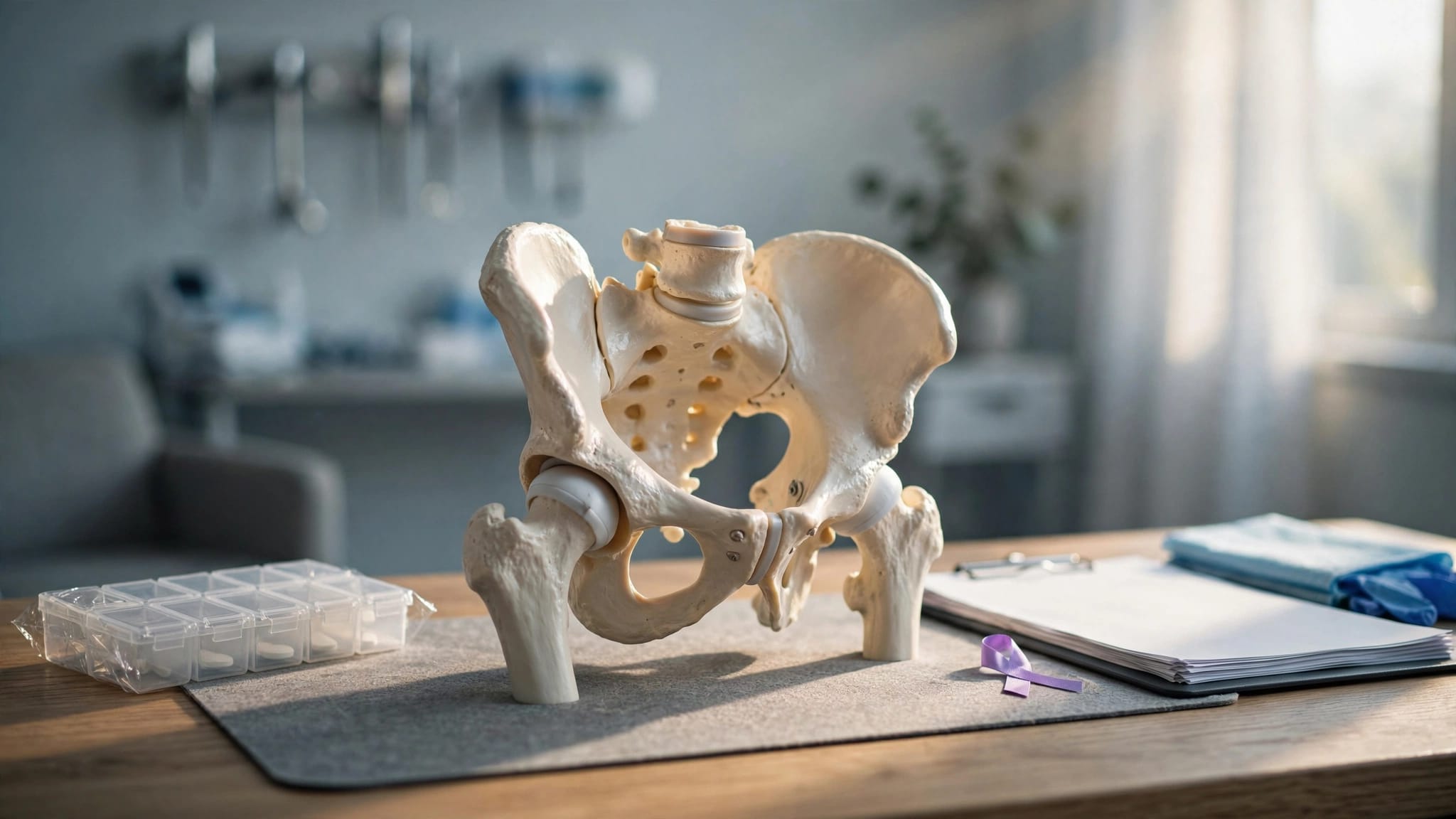
The acetabulum is the part of the pelvis that forms the hip socket. In a total hip replacement, the surgeon prepares that socket for a cup and places a separate stem in the thighbone.
The cup needs a secure foundation
A replacement cup must contact enough sound bone to stay in position. Some cups achieve their initial grip through a close fit with prepared bone. Screws can provide additional fixation when appropriate.
If the socket has a small defect but otherwise offers solid support, a surgeon may be able to use a standard cup. A larger defect can leave the cup without enough contact or make it difficult to position correctly. In that situation, the plan may include extra components or a different implant.
Bone loss and bone quality are different concerns
Bone loss describes missing or damaged bone. Bone quality describes the strength of the bone that's left. A person can have a defect in the socket, fragile bone, or both.
Osteoporosis, for example, can make fixation less predictable even when the socket's shape appears reasonably preserved. The surgeon also considers the thighbone, because the stem needs stable support of its own. Our discussion of osteoporosis and hip replacement planning explains how bone strength can affect implant choices.
How the location of acetabular bone loss changes the plan
The amount of missing bone matters, but its location can be just as important. A defect beneath the cup creates a different problem than a missing section along its rim.
Loss at the roof or rim
The upper part of the socket carries substantial force when you stand and walk. If bone is missing there, the surgeon must assess whether the cup can gain enough support and coverage in the remaining pelvis.
A shallow socket caused by hip dysplasia can present a related challenge: the available bone may not cover the cup as expected. In either situation, the surgeon must balance cup position with the need for secure contact. Hip dysplasia and acetabular implant planning looks at these anatomical differences in more detail.
Loss in the socket wall or deeper pelvis
A defect in the inner wall can affect how deeply the cup sits and whether it has a sound surface behind it. Missing bone along the front or back of the socket can affect rim support and the direction in which screws can be placed safely.
In severe cases, the supporting parts of the pelvis may no longer be connected as they should be. Surgeons call this pelvic discontinuity. It makes reconstruction more complex because the plan must address both cup fixation and the unstable pelvic bone.
How surgeons assess the socket before surgery
Imaging helps a surgeon map the defect and prepare implant options. Your symptoms and medical history also matter, since a scan alone doesn't explain every source of hip pain.
X-rays and CT scans
X-rays are usually the starting point. A pelvis image and additional hip views can show changes in socket shape, implant position, old fracture hardware, and the relationship between the two hips. Older images may reveal whether bone loss or implant movement has progressed.
When X-rays don't show the anatomy clearly enough, a CT scan can provide a more detailed view. It may help show the socket walls, the location of screws, or the extent of a defect. Not everyone needs a CT scan.
Medical history and bone health
The surgeon will consider previous operations, fractures, infections, and any history of dislocation. Osteoporosis, medication use, and other health conditions can also influence the plan.
A bone density test may be useful when bone strength is in question. For a painful existing replacement, the evaluation may include tests for infection. Infection needs its own treatment plan because replacing a loose component alone won't address it.
When a bone graft may help
A bone graft places bone material in an area where bone is missing. The material may come from the patient or from a donor. Its role depends on the size and location of the defect and on the rest of the reconstruction.
Filling a contained defect
Some defects are surrounded by remaining bone, which can help contain graft material. A surgeon may use graft in a suitable area while securing the cup to supportive bone nearby.
The graft may help fill the defect and provide material for bone healing. It isn't a substitute for a secure implant at the time of surgery. The surgeon still needs a fixation plan suited to the bone that remains.
Rebuilding a larger area
More extensive loss can require a combination of graft and other support. The surgeon weighs how much bone is missing, whether the surrounding bone can hold the implant, and what forces the reconstruction will carry.
Grafting can affect recovery instructions because the repaired area may need protection while healing. It also introduces considerations such as whether the graft incorporates into the surrounding bone. A graft is one possible part of reconstruction, not a requirement for every socket defect.
How augments and specialized implants add support
When a standard cup can't obtain a dependable fit, the surgeon may consider components designed for a more complex socket. The choice depends on the defect and the quality of the remaining pelvic bone.
Metal augments and additional fixation
An augment is an added component that helps fill or support an area where socket bone is missing. The surgeon may combine it with a cup and, when appropriate, screws. The goal is to give the cup a stable base while placing it in a position that supports hip movement.
Augments don't restore every feature of the original socket. They are selected to address a particular defect. Our article on hip replacement with prior hardware discusses why previous surgery can also affect component choices.
Different cup and bearing options
A surgeon may select a different cup design or size when the usual option won't fit the available bone securely. The plan may also include more than one component option because the bone's condition can look different once the surgeon sees it directly.
The bearing, where the replacement parts move against each other, is a separate decision. Dual mobility hip implants may help reduce dislocation risk for some patients with previous instability or less soft-tissue support. They don't repair missing bone or treat infection.
Why previous surgery or injury matters
The cause of the damage helps the surgeon anticipate what might be found during reconstruction. An old injury and a loose replacement can create different problems, even if both patients have socket bone loss.
After an acetabular fracture
An acetabular fracture involves the hip socket itself. After it heals, the socket may have an uneven surface, altered alignment, or retained plates and screws. These changes can affect cup position and access to healthy bone.
Hardware doesn't always need removal. It may stay if it doesn't interfere with the new implant or treatment of a problem. Removing well-fixed hardware can require additional dissection, so the decision depends on its location and condition. Read more about hip replacement planning after pelvic fracture.
After a previous hip replacement
Bone loss can also develop around an existing implant. For example, particles released as bearing surfaces wear can irritate surrounding tissue and contribute to bone loss. A loose cup may then have less support.
Revision surgery doesn't always involve replacing every component. The surgeon evaluates which parts remain secure, whether infection is present, and how much bone is available before planning the operation.
What a complex reconstruction can mean for recovery
The reconstruction plan affects more than the implant selected. It can also influence the surgical approach, precautions after surgery, and the amount of support you need during recovery.
Surgical access and implant position
The surgeon needs enough access to assess the defect, prepare the bone, and place the components accurately. A tissue-sparing approach such as SuperPATH may suit some patients, while extensive bone loss, scarring, or prior hardware may make another approach more appropriate.
Cup placement also affects the hip's center of rotation, leg length, and stability. The surgeon balances those goals with the bone available for fixation. Exact leg-length equality isn't always possible or safe, particularly when the original anatomy has changed.
Weight bearing and follow-up
After a complex reconstruction, your surgeon may limit how much weight you put on the operated leg for a period. Instructions depend on the stability of the repair and whether graft or other support was needed. Follow the plan provided for your operation rather than another patient's timeline.
Recovery also includes rehabilitation and follow-up imaging. Potential complications include infection, dislocation, fracture, loosening, and persistent pain. Your surgeon can explain which risks are most relevant to your health and reconstruction.
What to discuss at your orthopedic consultation
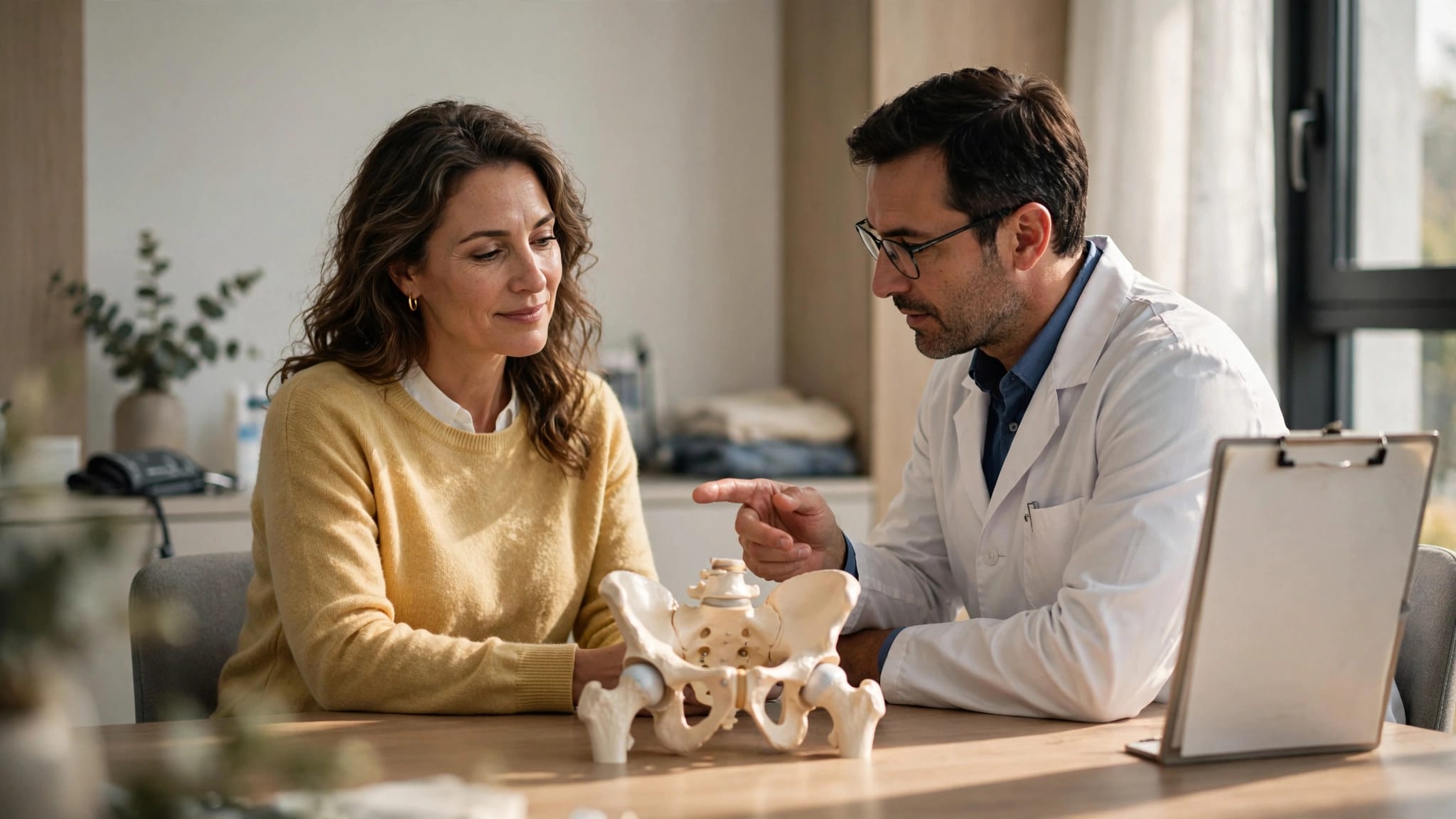
Ask your surgeon to show you where bone is missing on your images and explain whether the remaining bone can support a cup. It can also help to discuss whether a graft, augment, screws, or a different implant may be needed.
If you've had an earlier operation, bring available records and images. Ask how prior hardware or infection would affect the plan, and what might change once the surgeon examines the socket during surgery.
At our Fort Myers practice, we provide hip replacement care and can discuss how your symptoms, images, and medical history affect your options. Depending on the complexity of the reconstruction, your evaluation may also include discussion of referral for specialized care.
A plan built around the bone you have
Acetabular bone loss doesn't automatically rule out hip replacement. It changes how the surgeon plans to secure the socket and what support may be needed.
The most useful plan accounts for where the bone is missing , the strength of what remains, and the position the implant needs to hold. Your surgeon can connect those findings to a reconstruction and recovery plan for your hip.
ADDITIONAL ARTICLES