November 12, 2026
What Happens After a Hip Replacement Dislocates?
A hip replacement dislocation needs emergency care . The artificial ball has come out of its socket, and a medical team needs to assess the hip and put it back in place safely.
The experience can be frightening, especially if your recovery had been going well. Many first dislocations can be treated without another operation, though you may need new movement precautions and follow-up care.
Knowing what happens next can help you get treatment and understand your recovery plan.
Signs That a Hip Replacement Has Dislocated
A dislocation often causes sudden, severe pain in the hip or groin. You may feel a pop as it happens and find that you can't stand or put weight on the affected leg.
The leg can look shorter than the other one or turn inward or outward. Moving it may be painful or impossible. Some people also notice an obvious change in the shape of the hip.
Symptoms can happen after a fall, a twist, or a deep bend. A dislocation can also occur during an ordinary movement, such as getting up from a low chair. You may not know exactly what caused it.
Not every click or ache means your hip has dislocated. However, sudden pain with a loss of function deserves emergency evaluation. Even if the pain eases or the hip seems to move back into place, it still needs medical attention.
What to Do Right Away
Stop moving and avoid putting weight on the leg. Don't try to walk it off, straighten the leg, or push the hip back into place. Those attempts can cause further injury.
Call 911 if you can't get to the emergency department safely. Emergency personnel can help move you while limiting unnecessary movement. If you fell and may have injured your head, neck, or back, stay where you are and wait for help.
While you wait, keep the leg in the position that feels most comfortable. A pillow or folded blanket may support it, but don't force the leg into a different position. Don't drive yourself.
Tell the emergency team that you have a hip replacement. If you fell, describe how you landed and mention any head injury, dizziness, numbness, or blood thinner use. Our guidance on what to do after a fall following hip replacement covers other details that can help your care team.
You may need sedation or anesthesia, so avoid eating or drinking until the emergency team advises you. Don't delay calling for help to gather records or belongings.
What Happens in the Emergency Department
The emergency team will assess your pain, examine the leg, and order imaging. They will also look for injuries that may affect how the hip can be treated.
Examination and X-rays
A clinician will ask about the movement or injury that brought on your symptoms. The team will also check circulation and nerve function in the leg and foot, including sensation and your ability to move your foot.
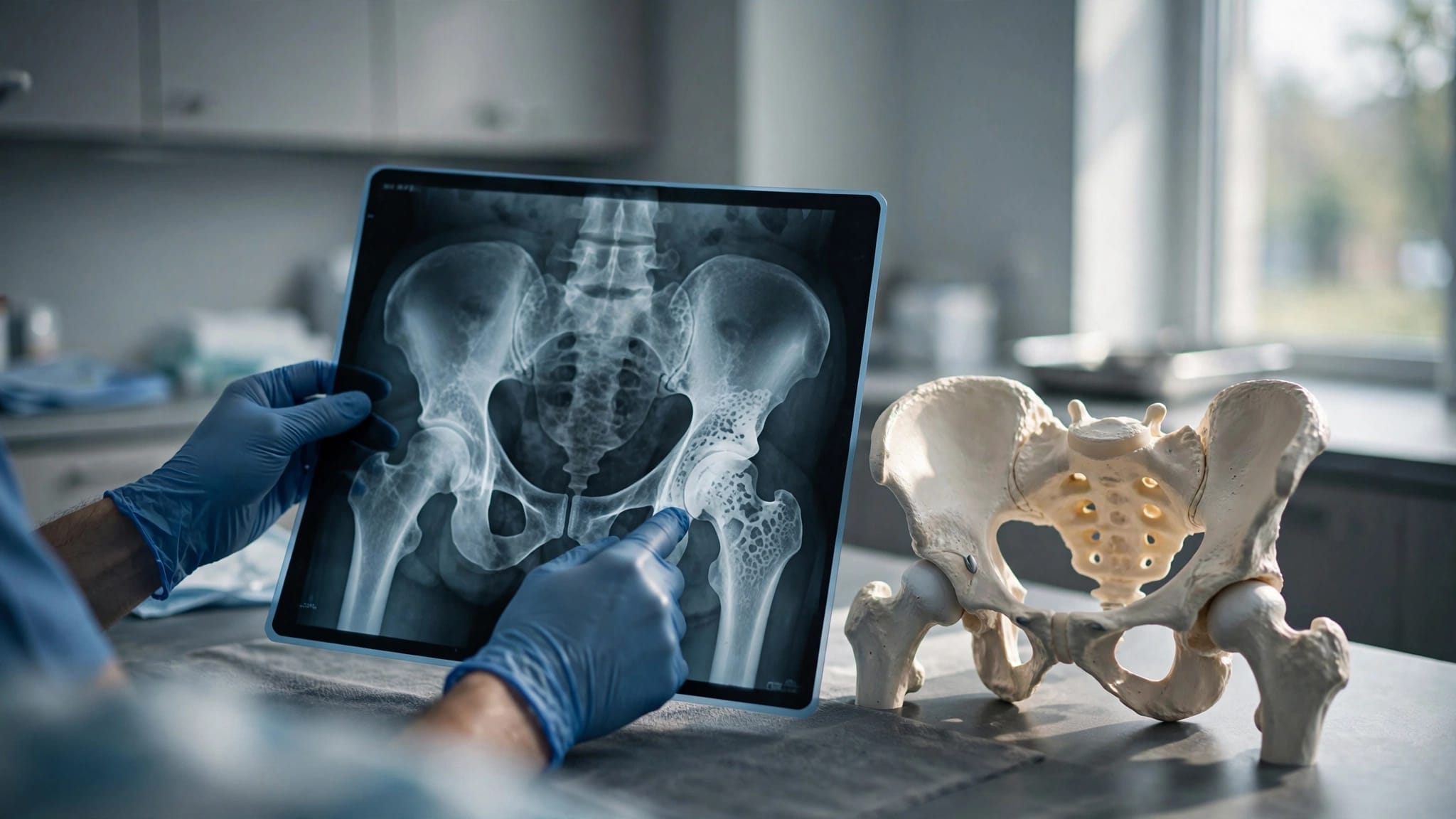
X-rays usually show whether the artificial ball is out of the socket. They can also reveal a fracture or another visible problem around the implant. If you fell, the team may examine other areas that hurt as well.
Planning the next step
Tell the team about previous hip operations, earlier dislocations, allergies, and the medicines you take. Information about your implant can help if it's available, but treatment shouldn't wait while someone searches for it.
Pain medicine may be given while the team prepares treatment. An orthopedic surgeon may be involved, particularly if there is a fracture, an unusual implant problem, or difficulty putting the hip back in place.
How the Hip Is Put Back in Place
Putting the ball back into the socket is called a reduction . The method depends on the X-rays, your health, and whether there are injuries or implant problems.
Closed reduction
For many patients, the team first attempts a closed reduction. This means the clinician guides the hip back into place without making an incision.
You will usually receive medication to control pain and help your muscles relax. Depending on the situation, this may involve sedation or anesthesia. The team monitors you during the procedure and recovery.
Afterward, new X-rays are taken to confirm that the ball is back in the socket. The team also checks the leg's circulation and nerve function again. Pain often improves once the joint is back in place, although soreness can remain.
When an operation is needed
A closed reduction doesn't work for every dislocation. The hip may be difficult to reposition, or it may come out again when the team assesses its stability.
In those cases, an operation may be needed to put the joint back in place or address the cause of instability. A fracture or damage to the implant can also change the treatment plan. Your surgeon will explain what the imaging and examination show.
What Happens After the Hip Is Back in Place
Once the hip is reduced, the team will assess whether you can move safely and whether your pain is controlled. Your discharge plan depends on the stability of the hip, the medicines you received, and any other injuries.
Some people can go home after observation. Others need to stay in the hospital, particularly if they have a fracture, another medical concern, or difficulty walking safely.
Before you leave, you may practice standing or walking with a walker or another aid. The team may recommend a brace for certain patients. A brace isn't needed after every dislocation, and its purpose and duration depend on your situation.
You'll also receive instructions about pain relief and follow-up with an orthopedic surgeon. If you had sedation, arrange for someone to take you home and follow the discharge instructions about activities that require alertness.
Recovery and Activity Restrictions at Home
Recovery after a hip replacement dislocation varies. Your plan may differ from the instructions you received after your original operation because the surgeon is now treating an episode of instability.
Walking and daily tasks
Use your walker, cane, or other support as directed. Short, controlled walks may be part of your recovery, but follow your team's instructions about how much weight to place on the leg.
Make everyday tasks easier while you're healing. A firm chair that's easy to rise from can be more comfortable than a low, soft seat. Sit to get dressed, and use a reacher or long-handled shoehorn if your team recommends one.
Our advice on home safety during hip replacement recovery includes practical ways to reduce strain during daily routines.
Movement precautions and physical therapy
Your surgeon may ask you to avoid certain positions, such as deep bending, crossing your legs, or twisting on a planted foot. The directions depend on how your hip dislocated and how stable it is after reduction. They aren't identical for every patient.
Physical therapy may help you regain strength, balance, and confidence with walking. A therapist can also show you how to get in and out of bed or a car while following your precautions.
Don't return to driving, exercise, heavy lifting, or other demanding activities until your surgeon says it's appropriate. Avoid driving while medication makes you drowsy or slows your reactions.
Can a Hip Replacement Dislocate Again?
Yes. A previous dislocation means your surgeon will pay close attention to the chance of another one. Many hips remain stable after reduction, but others need additional treatment.
Why another dislocation can happen
The early weeks after hip replacement are a vulnerable period because the tissues around the joint are still healing. A fall or certain hip positions can contribute to a dislocation during that time.
Other factors can include the position of the implant components, weak or damaged muscles, changes in hip anatomy, and conditions that affect balance or muscle control. Spinal stiffness can also affect how the pelvis and hip move when you sit or stand.
Dislocation remains possible with any surgical approach. Our article on SuperPATH hip replacement and dislocation explains how individual factors affect risk.
How your surgeon assesses stability
Your surgeon will review what happened, examine your hip, and study the imaging. Earlier X-rays and operation records can help show whether implant position, wear, or another issue may be involved.
A first dislocation may respond to reduction, activity changes, a brace, or therapy. The treatment plan depends on the likely cause rather than the number of precautions someone else received.
When Further Treatment or Revision May Be Needed
Another operation isn't automatic after a dislocation. Your surgeon may consider further treatment if the hip remains unstable, dislocates again, or has a problem that reduction alone can't fix.
Addressing the cause
A revision operation repairs or replaces part of an existing hip replacement. Depending on the problem, the surgeon may adjust or replace components, address damaged bone, or treat another source of instability.
A fracture around the implant needs its own assessment. Some fractures require fixation, while others need revision if the implant is loose or the surrounding bone can't support it.
Our guide to revision surgery for hip instability describes situations in which another procedure may be considered.
Choosing an implant for stability
For some patients, a surgeon may consider a dual mobility implant during revision. Its design allows movement at two bearing surfaces and may reduce instability in selected cases.
It's one possible part of a treatment plan, not a guarantee against another dislocation. Infection, loose components, bone loss, and severe muscle damage may need separate treatment. Learn more about dual mobility implants after dislocation and the factors that affect their use.
Revision also carries risks, including infection, fracture, blood clots, nerve injury, continued pain, and further instability. Your surgeon can discuss those risks alongside the expected benefit for your hip.
When to Seek Help During Recovery
A new episode of sudden hip pain, a visibly unusual leg position, or an inability to bear weight calls for emergency care. Don't wait for a routine follow-up if you think the hip has dislocated again.
Contact your surgeon promptly about worsening pain, increasing redness or swelling, fever, or drainage from the incision. These symptoms need assessment because they can point to an infection or another complication.
New calf pain or swelling also deserves prompt medical attention. Call 911 for chest pain or sudden shortness of breath, which can be signs of a blood clot that has traveled to the lungs.
Keep your scheduled orthopedic follow-up even if you're feeling better. It's a chance to review the X-rays, discuss the likely cause, and adjust your recovery plan.
Your Next Step After a Hip Dislocation
A dislocated hip replacement needs prompt treatment, but it doesn't always mean you'll need another surgery. Reduction, a careful recovery plan, and orthopedic follow-up may be enough for a stable hip.
If you've had a dislocation, we can help assess your hip and discuss the next steps at Ameglio Orthopedics in Fort Myers. Your plan should fit the cause of the dislocation and your recovery goals.
ADDITIONAL ARTICLES