August 22, 2026
Knee Replacement Stiffness: When Exercise Isn't Enough
Stiffness after knee replacement can make everyday movements feel harder than expected. Knee replacement stiffness may limit bending, prevent the knee from fully straightening, or make walking uncomfortable even when pain has improved.
Exercise is an important part of recovery, but it doesn't solve every cause of limited motion. Scar tissue, swelling, infection, implant problems, or poor motion before surgery may require assessment by an orthopedic surgeon. Knowing when to request an evaluation can help you address the problem before stiffness becomes harder to treat.
Why Knee Replacement Stiffness Can Continue
Some stiffness is normal during the early weeks after surgery. The knee may swell after walking or therapy, and the surrounding muscles often remain weak. However, persistent or worsening stiffness deserves attention, particularly when progress has stopped.
The cause isn't always obvious from symptoms alone. An orthopedic care team must examine the joint and, when needed, use imaging or laboratory tests to identify the problem.
Scar tissue and arthrofibrosis
One common cause is arthrofibrosis , which occurs when excess scar tissue forms around the knee. This tissue can restrict the normal glide of the joint and make bending or straightening difficult.
Arthrofibrosis may develop after surgery, especially when swelling, inflammation, or limited movement continues. A patient may work hard in therapy yet gain very little motion. In this situation, repeating the same exercises may not remove the physical restriction.
Pain can also reduce movement. When the knee hurts during bending, you may protect it without realizing it. Less movement can then increase stiffness, creating a cycle that supervised treatment needs to interrupt.
Other causes your surgeon must check
Scar tissue is only one possible explanation. Your orthopedic surgeon may also check for:
- Infection inside or around the replaced joint
- Implant malposition, loosening, or instability
- Ongoing swelling or fluid in the knee
- Limited range of motion before surgery
- Problems with the kneecap's movement or surrounding soft tissues
These conditions can look similar at first. Only an examination and appropriate testing can separate them. Treating presumed scar tissue without ruling out infection or a mechanical problem may delay the right care.
When Knee Replacement Stiffness Needs More Than Exercise
Recovery speed varies, so one difficult week doesn't automatically mean something is wrong. Still, a knee that has plateaued deserves review when bending remains severely limited, straightening is incomplete, or daily activities continue to become harder.
Some orthopedic studies use flexion below 90 degrees or more than 5 degrees of lost extension after 12 weeks as a practical marker of significant stiffness. Those measurements don't diagnose the cause, and your surgeon will interpret them alongside pain, swelling, strength, wound healing, and progress over time.
A plateau matters more than a calendar date
A patient may still have swelling and stiffness several months after surgery, but improvement should generally follow a gradual pattern. If your motion improves for a while and then stops, tell your surgeon or physical therapist.
Early follow-up can matter because some treatments work best before scar tissue matures. You can review typical milestones in this month-by-month knee replacement recovery, but use general timelines as a guide rather than a personal deadline.
More exercise isn't always the answer
When swelling or scar tissue limits the joint, forcing additional repetitions can increase irritation. More pain may lead to more guarding, which can make movement even more difficult.
Don't independently change your exercise plan, add forceful stretching, or stop therapy without speaking with your care team. Your surgeon and physical therapist may need to adjust the type, intensity, or timing of treatment after examining your knee.
How an Orthopedic Surgeon Evaluates a Stiff Knee
The evaluation starts with the story of your recovery. Your surgeon will want to know when stiffness began, whether it has improved or worsened, and how much motion you had before surgery.
The team may also ask about pain at rest, pain during therapy, fever, drainage, clicking, instability, and difficulty bearing weight. These details help distinguish expected healing from a condition that needs targeted treatment.
Physical examination and range-of-motion testing
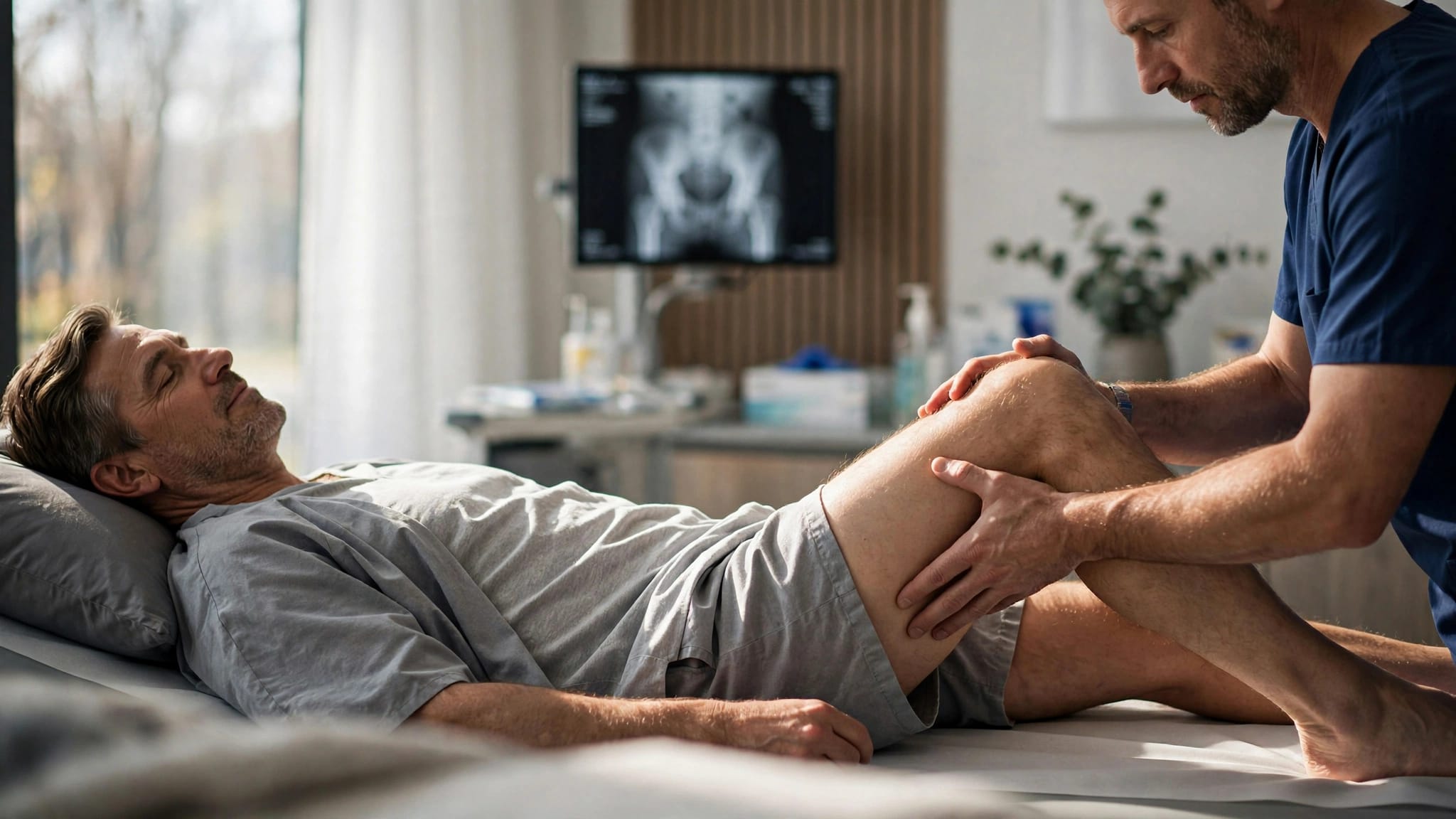
During an exam, the surgeon measures how far the knee bends and how close it comes to full extension. They may compare both legs and watch you walk.
The exam also includes the incision, warmth, redness, swelling, muscle strength, stability, and kneecap tracking. A sudden loss of motion or new instability can point toward a different problem than gradual stiffness.
Your surgeon may also review your therapy records. The frequency of treatment, home exercises, changes in swelling, and actual motion measurements can show whether the knee has responded to rehabilitation.
Imaging and infection testing
X-rays help show whether the replacement components are aligned and positioned appropriately. They may also reveal signs of loosening, fracture, or other structural concerns.
If infection is possible, your care team may order blood tests and, when indicated, remove a small amount of joint fluid for laboratory analysis. Infection can occur without dramatic symptoms, so it must be considered before treating stiffness as arthrofibrosis.
Additional testing depends on the examination and the suspected cause. Your orthopedic surgeon will choose the tests that answer the most important clinical questions.
Treatment Options After Exercises Fall Short
Treatment depends on the cause, the amount of lost motion, and how long the stiffness has been present. The goal is to improve function while protecting the implant, wound, and surrounding tissues.
Physical therapy often remains part of treatment, but it may be combined with another procedure when scar tissue creates a firm restriction.
Manipulation under anesthesia
Manipulation under anesthesia, or MUA, is a clinician-directed procedure that moves the knee while you are under anesthesia. The surgeon uses controlled motion to break up adhesions and improve the range of motion.
AAOS guidance commonly places MUA in the first 6 to 12 weeks after surgery when the implant is well aligned, infection has been ruled out, and stiffness is limiting recovery. Some surgeons may consider it within the first three months based on the individual situation.
Patients may gain about 30 degrees of motion after MUA, although results vary. The procedure also has risks. When performed later, mature scar tissue may require more force, which can raise the risk of fracture or injury to the extensor mechanism. Timing should come from your orthopedic surgeon, not from a calendar alone.
Lysis of adhesions and revision surgery
Arthroscopic lysis of adhesions uses small instruments to remove scar tissue from inside the joint. It may be considered after the early MUA window or when MUA has not restored enough motion. Published reports describe potential range-of-motion gains of roughly 24 to 31 degrees in some patient groups.
Open scar-tissue removal may be appropriate for more established or complex stiffness. If the implant is loose, poorly positioned, unstable, or infected, revision surgery may be necessary. A confirmed infection may require antibiotics and surgery, depending on its timing and severity.
Revision knee replacement is a larger operation and often has less predictable results than earlier treatment for isolated scar tissue. That is why identifying the cause before choosing a procedure matters.
What Recovery After Stiffness Treatment May Involve
A procedure to improve motion doesn't replace rehabilitation. The knee can form scar tissue again if motion remains limited after treatment, so your orthopedic team may begin movement work soon after the procedure.
The exact plan depends on the procedure, your health, the condition of the joint, and the surgeon's findings.
Early movement and physical therapy
After arthroscopic lysis of adhesions, many protocols begin range-of-motion work on the first postoperative day. Therapy may occur several times each week, with a home program between appointments.
Some patients use a continuous passive motion machine, while others follow active exercises and assisted stretching. Your surgeon may allow weight bearing as tolerated or provide different restrictions. Follow the prescribed plan rather than copying another patient's recovery routine.
Swelling control also matters. Elevating the leg, using cold therapy when approved, and pacing activity may help you complete therapy more comfortably. Ask your care team how to use these measures safely.
Factors that affect progress
Several factors influence the result, including the amount of motion before surgery, the cause of stiffness, the timing of treatment, infection status, component position, and your response to therapy.
Other medical conditions can also affect healing and rehabilitation. Share your full medication list and health history with the orthopedic team. If the knee continues to lose motion despite treatment, report that change instead of waiting for the next routine visit.
Urgent Warning Signs After Knee Replacement
Stiffness alone usually calls for a scheduled orthopedic assessment. Certain symptoms need faster attention because they may signal infection, a blood clot, a wound complication, or a sudden mechanical problem.
Infection and wound problems
Call your surgical team promptly if you develop increasing redness, warmth, swelling, drainage, or pain around the incision. Fever, chills, unusual fatigue, or feeling acutely ill also require medical attention.
Persistent drainage or a wound that opens needs prompt review. Don't apply unapproved creams, cover worsening drainage without reporting it, or wait for a routine appointment when the incision is changing quickly.
An infection may involve the joint even when the incision looks mostly healed. Early assessment gives the care team more options for testing and treatment.
Blood clot or sudden mechanical symptoms
New calf pain, calf swelling, or one-sided leg swelling can indicate a blood clot. Sudden chest pain, trouble breathing, fainting, or coughing blood requires emergency care.
Seek urgent evaluation for an abrupt loss of motion, a painful pop, a new deformity, or sudden inability to bear weight. These symptoms can occur with a fracture, extensor mechanism injury, implant problem, or another acute complication.
When in doubt, contact your surgeon's office or local emergency service. A sudden change is more concerning than a stable limitation that has been present for weeks.
Preparing for an Orthopedic Surgeon Visit
Write down when the stiffness began and whether it followed a specific event, such as increased activity, a fall, or a sudden pop. Record your highest bending measurement if your therapist has provided one, along with swelling, pain, walking changes, and wound symptoms.
Bring your therapy schedule, current medications, and questions. Useful questions include:
- What causes of stiffness need to be ruled out?
- Does my range of motion suggest a plateau?
- Do I need blood tests, joint-fluid testing, or new X-rays?
- Is continued therapy appropriate for my knee?
- Would MUA, lysis of adhesions, or another treatment fit my findings?
- What are the risks of waiting?
Patients seeking care in Southwest Florida can review information about knee replacement surgery in Fort Myers before scheduling an orthopedic consultation. Bring your concerns directly to the surgeon so the evaluation focuses on your recovery and goals.
Conclusion
Persistent knee replacement stiffness has several possible causes, and exercises alone may not solve the problem. Scar tissue is common, but infection, swelling, implant position, instability, and limited preoperative motion also need consideration.
Contact your orthopedic team when progress has stopped, and seek urgent care for fever, drainage, calf swelling, breathing trouble, sudden loss of motion, or inability to bear weight. A timely evaluation can identify the cause and guide the safest next step toward better movement.
ADDITIONAL ARTICLES