August 25, 2026
How Surgeons Choose SuperPATH Implant Size
Choosing a hip implant is not a matter of picking a size from a chart. The components must fit your bone, restore useful mechanics, and remain stable as you move.
During total hip replacement through the SuperPATH approach, SuperPATH implant size is planned before surgery but finalized in the operating room. Your orthopedic surgeon individualizes that choice using imaging, trial components, and direct testing of the reconstructed hip.
The preoperative plan provides a strong starting point, yet the final decision depends on what the surgeon sees and measures during surgery.
How surgeons choose SuperPATH implant size
SuperPATH, short for Supercapsular Percutaneously Assisted Total Hip, is a surgical route to the hip. It may preserve more of the soft tissue around the joint than some approaches. However, the approach does not establish a universal implant size or remove the need for precise hip reconstruction.
The same mechanical goals apply during any total hip replacement: stable fixation, appropriate component position, balanced soft tissues, and restoration of leg length and hip offset.
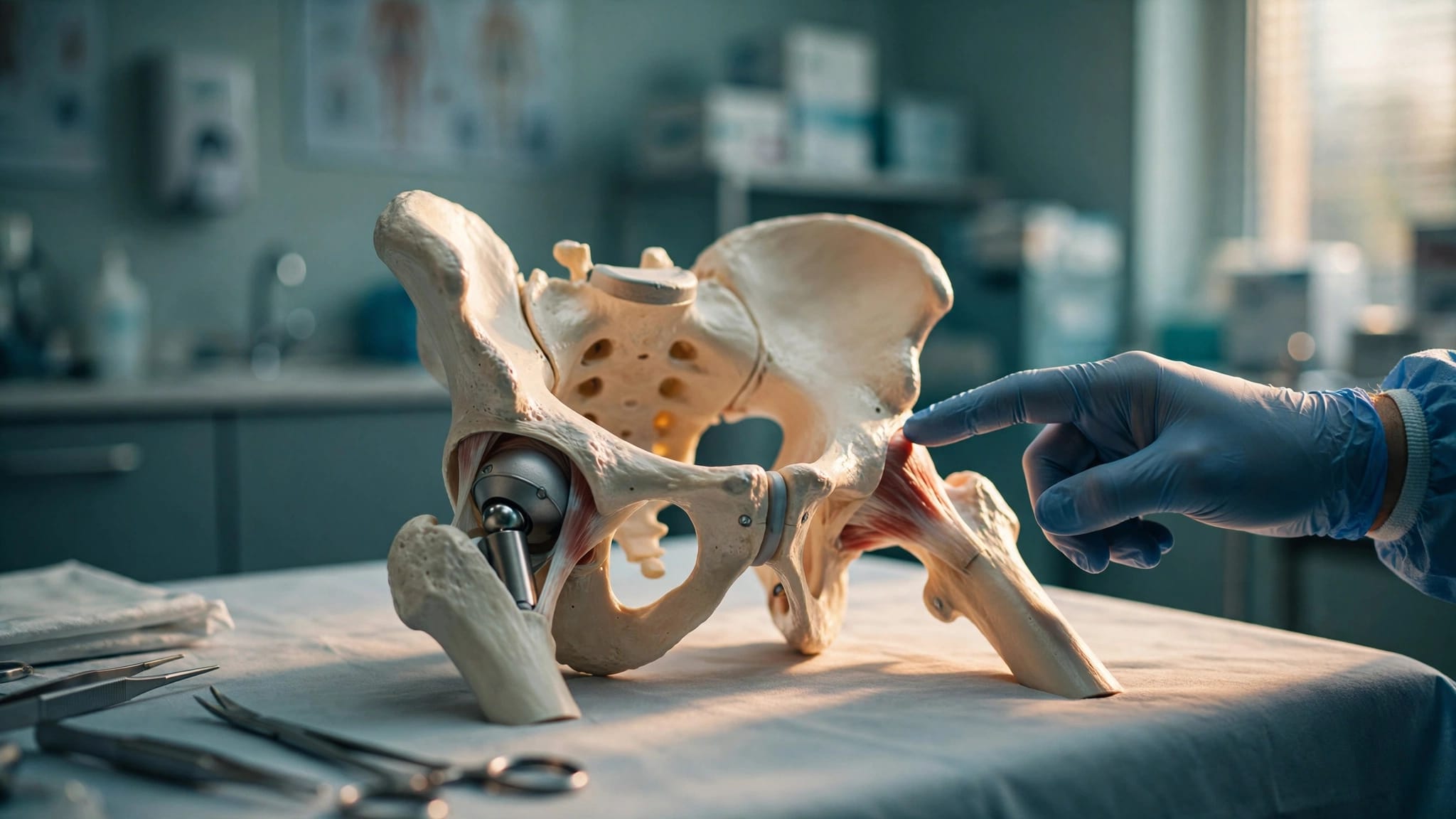
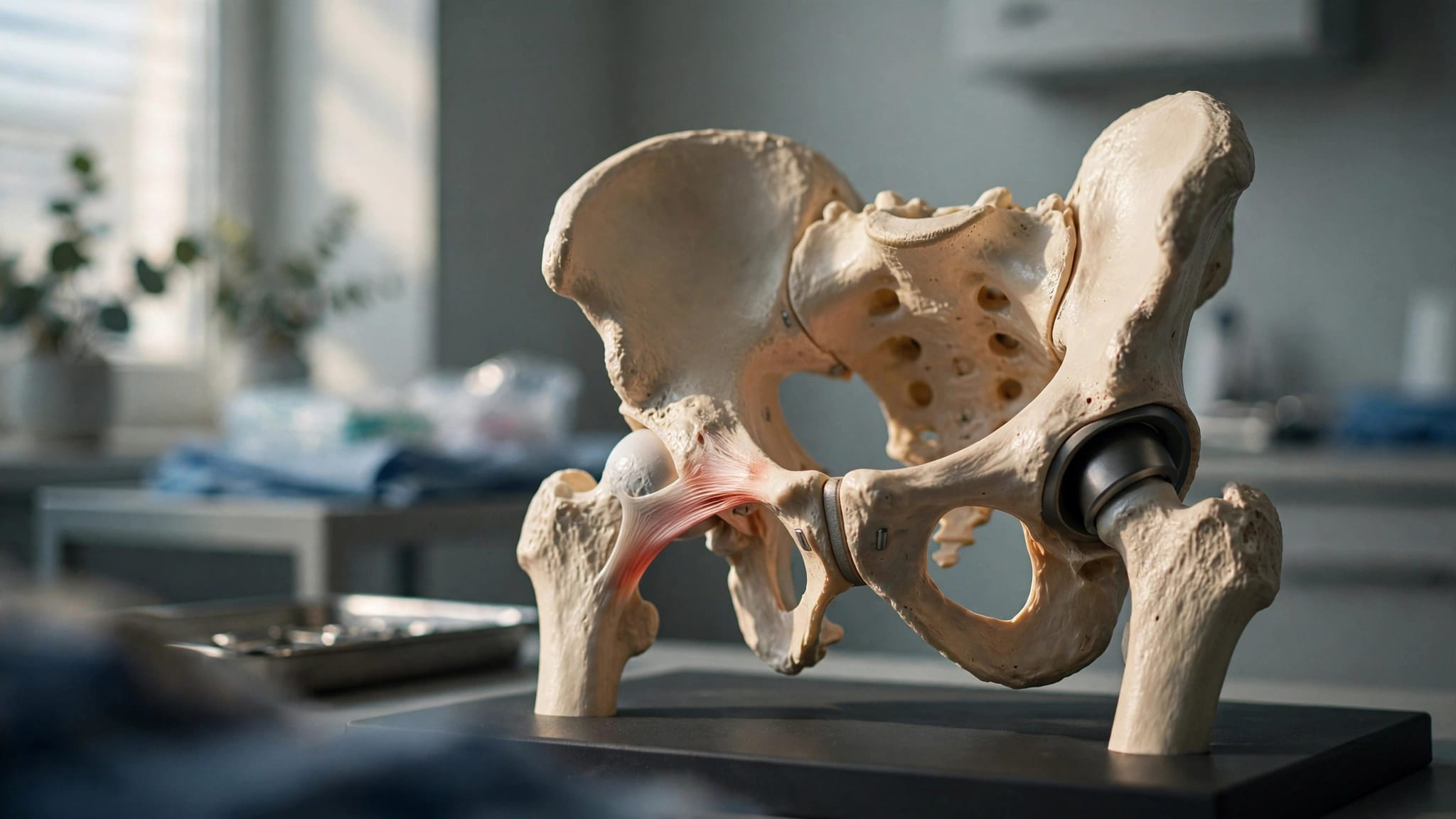
A total hip replacement has several connected parts
On the pelvic side, the surgeon places an acetabular shell, often called a cup, into the hip socket. A liner fits inside that shell and creates the bearing surface for the new joint.
On the femoral side, the surgeon places a stem inside the upper femur. A ball, called the femoral head, connects to the stem and moves within the liner.
Each part has dimensions that affect the others. Cup diameter, liner thickness, head diameter, stem size, neck length, and offset options all influence the final reconstruction.
The incision does not determine implant size
A smaller surgical corridor does not mean a smaller implant. Your pelvic anatomy, socket shape, femoral canal width, bone quality, arthritis pattern, and any prior surgery guide component selection.
Therefore, a proposed SuperPATH implant size is unique to your hip. Two people with similar height and weight may need different components because their bones have different shapes and proportions.
Preoperative imaging creates the first plan
Before surgery, the orthopedic surgeon studies imaging to estimate implant dimensions and position. This process is often called preoperative templating.
Templating helps the surgeon anticipate equipment needs and prepare more than one reasonable component option. Still, it remains a prediction until the hip is examined during surgery.
X-rays help estimate size, length, and position
Standard hip imaging often includes an anteroposterior pelvis X-ray and a side-view X-ray of the affected hip. A calibration marker can help account for X-ray magnification, which improves the accuracy of digital measurements.
Using specialized planning software, the surgeon can estimate cup size, stem size, femoral neck length, hip center, leg length, and offset. The opposite hip may offer a useful comparison when it has not been affected by arthritis, deformity, or previous surgery.
A preliminary SuperPATH implant size plan also helps identify potential issues. For example, a narrow femoral canal, shallow socket, old hardware, or bone loss may affect the surgical strategy.
Additional scans can clarify unusual anatomy
Some hips need more detailed imaging. A CT scan may help assess prior fractures, deformity, hardware, bone loss, or complex anatomy. It can also support planning for certain robotic-assisted procedures.
Patients comparing surgical technology can review SuperPATH versus robotic hip surgery. Robotic planning can help reproduce a surgical plan, but it does not replace intraoperative assessment.
Trial components confirm what fits during surgery
Once the surgeon reaches the hip, the plan becomes a hands-on assessment. Bone quality and internal anatomy can differ from what appeared on imaging, particularly when arthritis has altered the joint.
For that reason, a SuperPATH implant size selection may change during surgery. That adjustment reflects careful decision-making, not a failed plan.
The socket must support the acetabular cup
After preparing the hip socket, the surgeon evaluates its shape, bone coverage, and ability to hold the acetabular shell securely. With many implant systems, the surgeon prepares the socket in measured steps before placing a press-fit cup.
The goal is not to use the largest possible cup. Oversizing can remove unnecessary bone or compromise the fit. Undersizing can reduce initial fixation. The surgeon selects a shell that sits securely while preserving sound bone.
Cup orientation also matters. Its angle and version affect hip motion, stability, and the chance of impingement between components or bone.
The femur guides stem selection
The femoral canal has its own shape, width, and bone density. Surgeons use instruments called broaches to prepare the canal and assess how a stem will fit.
A well-fitted stem needs stable contact within the femur and appropriate seating depth. If a stem is too large, it can place excessive stress on the bone. If it lacks adequate fixation, the stem may not be stable enough for the chosen technique.
Trial stems allow the surgeon to test different sizes and configurations before placing the final implant. Bone quality can also affect whether cementless fixation, cemented fixation, or another implant strategy is appropriate.
Stability testing goes beyond component dimensions
An implant can appear to fit well on an X-ray and still need adjustment during surgery. The surgeon must also assess how the reconstructed hip behaves through controlled movement.
Trial components make this evaluation possible before finalizing the head, neck length, liner, and other connected parts.
Trial parts allow real-time adjustments
Depending on the implant system and surgical sequence, the surgeon may use trial stems, necks, heads, and liners that reproduce the dimensions of final components. These temporary parts allow adjustments without committing to a final configuration too soon.
The surgeon brings the hip through a range of motion and evaluates resistance to instability. They also look for impingement, which occurs when parts of the implant or surrounding bone contact each other in a way that limits motion.
Soft-tissue tension matters as well. A hip that is too loose may have less stability, while excessive tension can limit motion or affect leg length.
Component position works with stability
The cup and femoral stem must work together. Cup orientation and femoral version influence how the ball sits in the socket during sitting, standing, walking, and turning.
A correctly sized component still needs appropriate placement. Therefore, the surgeon may adjust the final position, neck length, head size, or offset option to improve the overall balance of the hip.
Testing lowers avoidable risks, but it cannot remove every risk after surgery. Healing tissues, falls, infection, bone quality, and individual recovery all affect the outcome.
Leg length and offset shape hip function
Patients often focus on whether both legs will feel the same length after hip replacement. That concern is understandable, yet leg length is only one part of a successful reconstruction.
The surgeon also evaluates leg length and offset , because both affect stability, muscle tension, walking mechanics, and comfort.
Leg length requires more than a visual comparison
Surgeons use the preoperative template, fixed bony landmarks, and intraoperative measurements to estimate leg length. In some cases, intraoperative imaging can add another point of reference.
However, the body is not perfectly symmetrical. Pelvic tilt, scoliosis, muscle tightness, hip contractures, and arthritis in the opposite hip can affect how leg length feels.
The surgeon balances the goal of restoring length with the need for a stable hip. A few millimeters can matter, which is why component size and neck length are tested rather than selected by appearance alone.
Offset helps the hip muscles work properly
Femoral offset is the distance between the center of the femoral head and the long axis of the femur. Total hip offset also includes the socket side of the reconstruction.
Restoring appropriate offset helps place the hip abductor muscles under suitable tension. Those muscles support the pelvis during walking and help keep the hip stable.
Too little offset can reduce muscle tension and may affect stability. Too much can place added stress on surrounding tissues. The surgeon may use a stem design, neck option, or head configuration that best restores the needed relationship.
Implant-system guidelines and patient questions matter
Hip implants come in matched systems with approved combinations of cups, liners, heads, stems, and tapers. The orthopedic surgeon follows the implant manufacturer's surgical technique and compatibility guidelines.
A liner must accept the selected head diameter. The head must also match the taper on the femoral stem. These details may sound technical, but they protect the integrity of the reconstructed joint.
Implant choices must work as a system
Surgeons do not mix components casually. Each implant system has defined sizes, materials, and combinations that are designed to function together.
The surgeon also prepares for more than one size option. If bone quality, socket shape, or femoral anatomy differs from the plan, the operating team can make a measured change without compromising the reconstruction.
The final SuperPATH implant size is therefore a clinical decision made by the surgeon after reviewing all of these factors.
Questions to bring to a hip replacement consultation
Implant sizing is only one part of deciding whether a SuperPATH procedure fits your situation. Anatomy, bone quality, prior surgery, and overall health can all affect the recommendation. A discussion of who qualifies for SuperPATH hip replacement can help frame that larger decision.
Consider asking your surgeon:
- How will you use my X-rays or other imaging to plan the hip replacement?
- What findings during surgery could lead you to change the planned implant size?
- How will you assess stability, leg length, and offset before finalizing the components?
- Does my bone quality or surgical history affect the approach or implant options?
- What recovery instructions will apply to my reconstructed hip?
Only the orthopedic surgeon who reviews your images and examines your hip can explain the plan for your case.
Final Thoughts on Implant Sizing in SuperPATH
Accurate hip reconstruction begins with imaging, but the final answer comes from direct surgical assessment. Trial components, stability testing, leg-length checks, offset evaluation, and implant-system guidelines guide the surgeon's final choice.
With SuperPATH, the route to the hip changes, while the need for precise mechanics remains the same. Fit and stability matter more than reaching a preselected implant number.
ADDITIONAL ARTICLES