November 22, 2026
How Surgeons Check Hip Implant Stability in SuperPATH
Surgeons assess hip implant stability during SuperPATH surgery by checking component fixation, testing temporary implant parts, moving the reconstructed joint, and evaluating leg length and muscle tension. These checks help determine whether the replacement fits securely and moves without an avoidable tendency to slip out of place.
A smaller surgical opening doesn't reduce the need for careful testing. Our goal is a balanced reconstruction that supports movement while protecting the surrounding bone and soft tissues.
That assessment involves several connected checks, rather than one measurement that establishes everything is right.
Key Takeaways
- Temporary trial components let the surgeon assess the reconstruction and make adjustments before selecting the final combination of parts.
- Movement testing helps reveal instability, excessive tightness, and impingement, which means unwanted contact between implant parts or surrounding bone.
- Leg length, offset, component position, and soft-tissue tension work together. A reassuring assessment during surgery lowers avoidable risks but cannot guarantee against a later dislocation.
What Hip Implant Stability Means During Surgery
Stability has two related meanings in hip replacement: the components must remain secure in bone, and the artificial ball must remain within the socket.
SuperPATH is a surgical approach designed to limit disruption to certain surrounding muscles and soft tissues. It doesn't change these basic mechanical goals.
Secure fixation in the bone
The socket component sits in the pelvis, while the femoral stem fits within the thighbone. Both need dependable support.
For a cementless implant, the initial fit must hold the component securely while bone later grows onto or into its surface. The surgeon evaluates bone quality, component seating, and resistance to unwanted movement during preparation and placement.
If a planned press-fit component lacks adequate stability, the surgeon may need another size or fixation strategy. Bone preservation matters too, because forcing an oversized component into place can damage the bone.
A ball that stays within the socket
The artificial ball also needs to remain properly contained as the hip moves. That depends on the relationship between the socket and stem, surrounding tissue tension, and the reconstructed hip's dimensions.
A stem can be secure in bone while the joint still has a tendency toward instability. Therefore, testing fixation alone doesn't complete the assessment.
Trial Components Allow Adjustments Before Final Selection
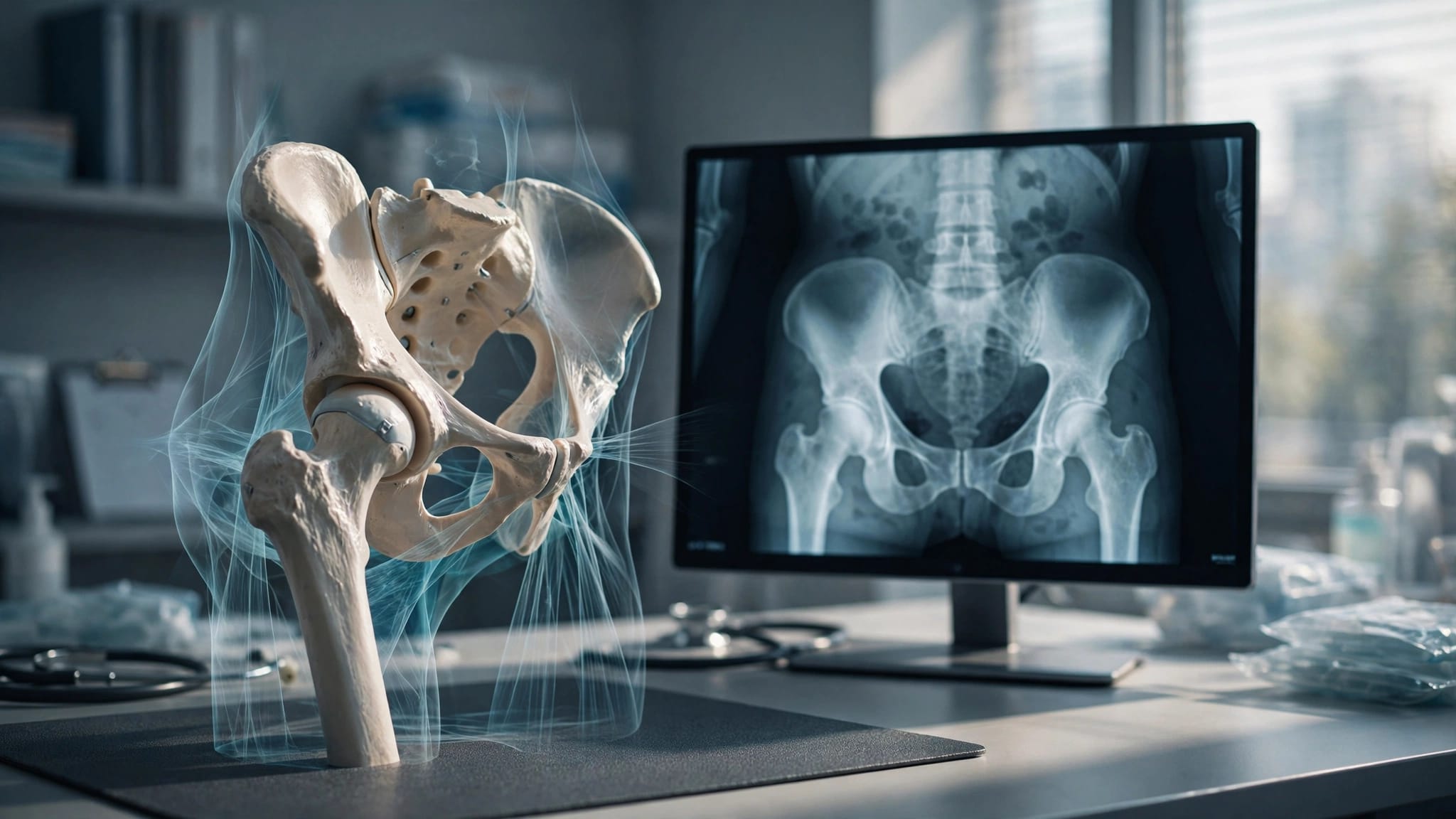
Preoperative X-rays and templating give the surgeon a starting plan. However, the operation reveals details about bone support and tissue tension that imaging cannot fully predict.
Temporary parts reproduce the planned reconstruction
Depending on the implant system and surgical sequence, the surgeon may use trial heads, necks, liners, or other temporary components. These parts reproduce the dimensions of the proposed final reconstruction.
The surgeon brings the trial ball and socket together to assess how they function as a joint. This allows evaluation before committing to the final combination.
Our explanation of how trial components guide implant selection describes how sizing and testing work together.
Changes address the cause of imbalance
If the trial hip feels too loose, too tight, or mechanically restricted, the surgeon reassesses why. Possible adjustments include a different neck length, offset option, head size, or component position, depending on the implant system.
Each change affects other parts of the reconstruction. For example, changing neck length can influence both tissue tension and leg length.
The surgeon then reassesses the hip rather than assuming that a single change solved the problem. Trial components make these comparisons possible without unnecessarily exchanging permanent parts.
How Movement Testing Reveals Instability and Impingement
With the reconstructed joint together, the surgeon moves the leg through a controlled range of motion. The assessment considers how the implant behaves within the patient's anatomy, rather than relying on appearance alone.
Assessing motion and soft-tissue tension
During movement, the surgeon evaluates whether the ball remains well contained and whether the tissues provide appropriate support. The hip should allow useful movement without excessive looseness or tightness.
Too little tension can leave the joint less resistant to slipping. Excessive tension can restrict motion and place unwanted stress on surrounding structures.
This assessment takes place under anesthesia, so it doesn't reproduce active walking or normal muscle control. Instead, it provides direct information about the reconstructed joint's mechanics while the surgeon can still make adjustments.
Identifying unwanted contact
Impingement occurs when implant parts or surrounding bone contact each other in a way that limits movement. For example, the artificial neck may contact the socket liner.
That contact matters because it can act as a lever and encourage the ball to move out of the socket. Therefore, a hip that feels snug still needs assessment for clearance during motion.
The surgeon considers the socket's orientation together with the stem's rotational position, called femoral version. These positions must work together to provide movement without avoidable contact. Appropriate implant size alone cannot compensate for an unfavorable relationship between the components.
Why Leg Length and Offset Need Separate Checks
Leg length and offset influence stability, comfort, and walking mechanics. Although they are related, they describe different dimensions of the reconstructed hip.
Leg length requires more than visual comparison
Surgeons use the preoperative plan, fixed bony landmarks, and intraoperative measurements to assess leg length. In some cases, imaging during surgery provides another reference.
The goal is to restore appropriate length while maintaining a stable, well-balanced joint. Selecting components by appearance alone cannot reliably accomplish that.
Also, the feeling of unequal leg lengths doesn't always come from the hip itself. Pelvic tilt, scoliosis, muscle tightness, and arthritis in the opposite hip can affect how the legs feel.
These factors explain why perfect-looking symmetry isn't the only consideration. The surgeon must balance length with tissue tension and the overall reconstruction.
Offset helps position the muscles
Femoral offset is the distance between the center of the hip ball and the long axis of the thighbone. Total hip offset also accounts for the socket side of the reconstruction.
Appropriate offset helps position the hip muscles so they can support the pelvis during walking. It also affects soft-tissue tension around the replacement.
If the reconstruction reduces offset too much, the tissues may become less supportive. Excessive offset can create unwanted tension.
The surgeon therefore evaluates length and offset together, using available component options to restore the hip's mechanics without simply making everything tighter.
What Surgeons Reassess Before Closing
Trial testing informs the final component choices, but the assessment doesn't end when the temporary parts come out. The surgeon also evaluates the completed reconstruction after placing the final components.
This includes checking component seating, the relationship between the ball and socket, and the hip's behavior during controlled movement. The final assessment brings together fixation, motion, leg length, offset, and soft-tissue balance.
Imaging adds information , but it doesn't replace hands-on testing. When used during surgery, an X-ray can help assess component position and the reconstructed hip's dimensions. However, an image cannot fully show how the joint behaves through movement or how the surrounding tissues feel.
The surgical approach must also provide adequate access to complete this work safely. If unusual anatomy or difficult exposure limits control, the surgeon may need to modify the plan. Preserving a small opening should never take priority over dependable preparation and component placement.
What Testing Can Tell You About Dislocation Risk
A dislocation occurs when the artificial ball leaves the socket. Intraoperative testing helps identify mechanical problems that could make this more likely, while the surgeon still has an opportunity to address them.
SuperPATH's tissue-sparing design may preserve structures that help support the hip. However, preserved tissue cannot compensate for every problem with implant position, anatomy, or tissue quality.
Our discussion of SuperPATH hip replacement and dislocation risk explains why the approach is only one part of the overall assessment.
A hip that tests well during surgery can still develop instability afterward. Healing tissues, falls, infection, bone quality, and individual recovery all affect the result.
Also, testing occurs in a controlled setting. It cannot reproduce every position or force the hip will encounter during daily life. A reassuring result supports the surgeon's decisions, but risk never becomes zero .
Frequently Asked Questions
Will I feel the surgeon testing my hip?
These assessments take place while you are under anesthesia. You won't be asked to move the leg or report how the trial implant feels.
Instead, the surgeon uses direct examination, measurements, and controlled movement to assess the reconstruction. Your anesthesia team manages your comfort and monitors you throughout the operation.
Because the assessment doesn't depend on your feedback, it can take place before the procedure is complete.
Does every patient receive exactly the same assessment?
The core goals are consistent, but the details depend on anatomy, bone quality, the implant system, and findings during surgery.
A stiff hip, previous surgery, significant bone loss, or unusual femoral shape can require additional attention. Surrounding tissue quality also affects how the surgeon interprets tension and resistance to instability.
That is why a fixed sequence of measurements cannot replace an individualized assessment. The surgeon combines the planned reconstruction with what the hip actually shows during the operation.
Is SuperPATH itself a type of implant?
SuperPATH describes the route the surgeon uses to reach and replace the hip. It isn't a particular artificial ball, socket, or stem.
The approach therefore doesn't establish one universal component size or combination. The surgeon still selects implants that fit the patient's anatomy and evaluates how those components function together.
This distinction matters when comparing surgery options: the approach and the implant reconstruction are related decisions, but they answer different questions.
A Stable Hip Requires a Balanced Reconstruction
Hip implant stability depends on several findings agreeing: secure fixation, compatible component positions, useful motion, and appropriate tissue tension. Leg length and offset are part of that balance.
Trial components allow adjustments before final selection. Reassessment of the completed hip helps the surgeon judge the reconstruction as a whole.
During your consultation, we can discuss how your anatomy and surgical needs shape that plan. The goal is a carefully tested hip replacement, with a clear understanding that surgery and recovery both influence the outcome.
ADDITIONAL ARTICLES