October 21, 2026
Periprosthetic Femur Fractures: Signs and Treatment
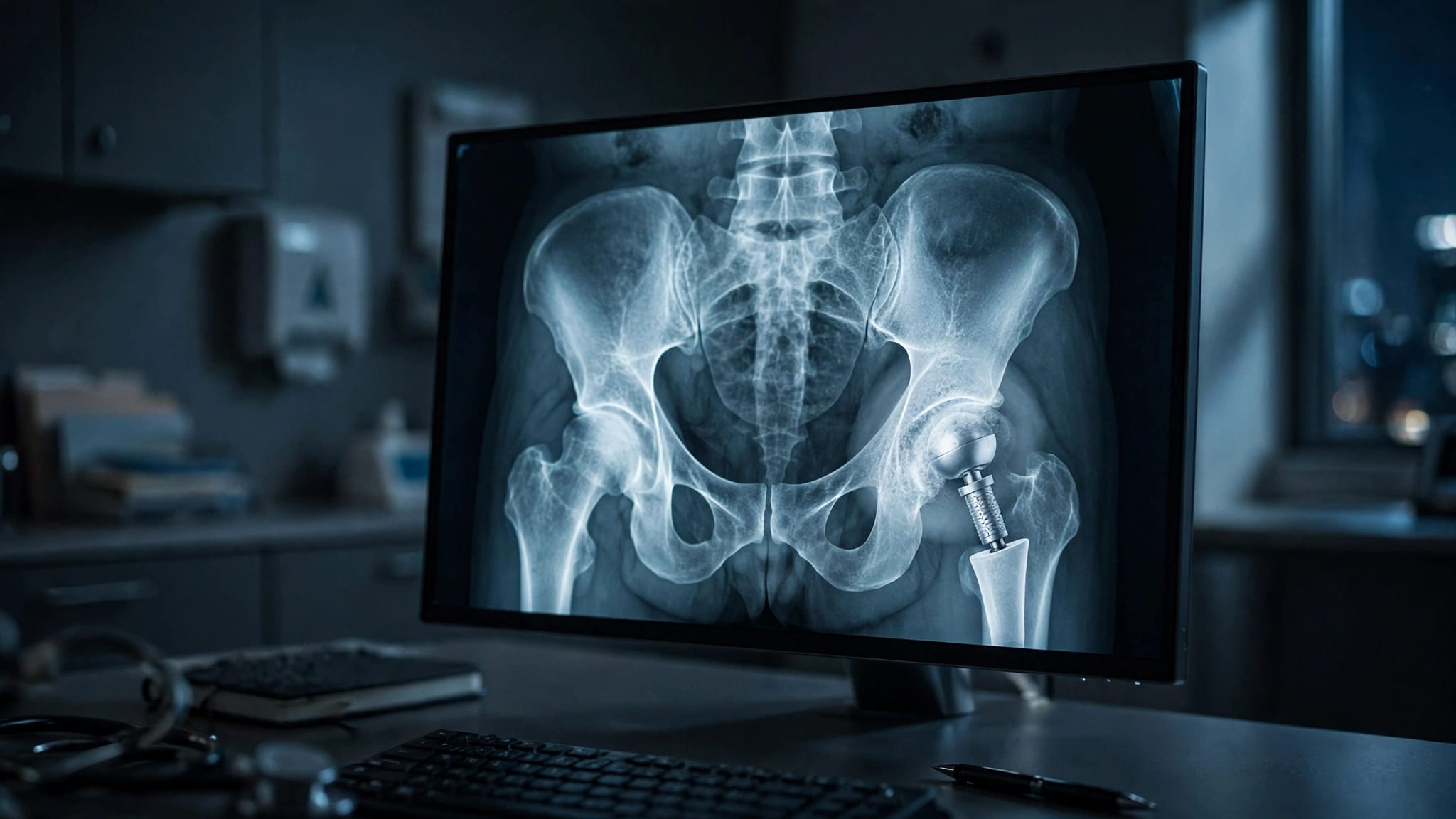
A periprosthetic femur fracture is a break in the thighbone around a hip replacement. Sudden pain, swelling, or difficulty standing after a fall can signal one, and needs prompt medical assessment.
Treatment depends on where the bone broke, whether the implant stem is stable, how much healthy bone remains, and your overall health. An orthopedic specialist uses those details to decide whether the fracture needs fixation, implant revision, or another plan.
Key Takeaways
- New hip or thigh pain after a fall, especially with difficulty bearing weight, needs urgent assessment.
- X-rays usually start the evaluation. A CT scan may add detail when the fracture or implant stability remains unclear.
- The Vancouver classification describes fracture location, stem stability, and bone stock. It helps guide planning, but does not determine treatment by itself.
- Some fractures can be managed without surgery. Many need an operation to stabilize the bone, revise a loose implant, or do both.
- Don't try to walk on a leg when you suspect a fracture. Seek urgent medical care and follow the orthopedic team's instructions.
What Is a Periprosthetic Femur Fracture?
"Periprosthetic" means around an artificial joint. In this case, the fracture affects the femur, or thighbone, near the stem of a hip replacement. It may happen after a fall or other injury. In some cases, weakened bone or a loose implant can contribute to a break after a less forceful incident.
The fracture may involve the bone beside the stem, above it near the hip, or below its tip. The stem's stability matters because a break around a well-fixed implant calls for a different plan from one around a loose implant.
A fracture around a hip replacement isn't the same as a routine hip fracture. The surgeon must assess both the broken bone and the implant, then consider whether the remaining bone can support the repair. The original hip replacement treatment options help explain the main components involved: a socket in the pelvis and a stem in the upper femur.
Warning Signs That Need Urgent Assessment
The most common warning sign is new pain in the hip, groin, or thigh , often after a fall or sudden injury. Pain may worsen with movement, standing, or putting weight on the leg. Swelling or bruising can develop around the upper leg.
Other possible signs include a sudden limp, reduced ability to move the hip, or a feeling that the leg won't support you. A visibly shortened, turned, or deformed leg can indicate a serious injury. Symptoms may be less obvious when a person has limited sensation or can't describe the pain clearly.
Seek urgent medical assessment after a fall or injury if you have severe pain, can't stand or bear weight, or notice a change in leg position. Don't test the leg by walking, and don't try to reposition it. Call emergency services if you can't be moved safely or the injury appears severe.
A fracture can also occur when pain or walking ability worsens after a period of recovery. Any sudden loss of function around a replaced hip deserves prompt attention, even if you don't recall a major fall.
How Doctors Diagnose the Fracture
Diagnosis combines your symptoms and medical history with a physical examination and imaging. Tell the care team when the pain began, whether you fell, and whether discomfort existed before the injury. Pain that began before a fall may help the surgeon assess whether the implant was already loose.
X-rays and CT scans
X-rays are usually the first imaging test. Doctors commonly take an anteroposterior view of the hip, along with front and side views of the full femur. These images can show the fracture's location and displacement, as well as changes such as a gap around the implant or a shift in its position.
A CT scan may help when X-rays don't show enough detail. It can clarify the fracture pattern, displacement, and remaining bone. However, imaging doesn't always settle whether the stem is stable. The orthopedic specialist interprets the scans alongside your symptoms, examination, and prior images.
The Vancouver classification
The Vancouver system groups fractures by location and implant stability. For fractures around the stem, it also considers the amount of bone remaining:
- Type A affects the trochanteric region. AG is the greater trochanter; AL is the lesser trochanter.
- Type B occurs around the stem. B1 has a stable stem, B2 has a loose stem with adequate bone stock, and B3 has a loose stem with poor bone stock.
- Type C occurs below the tip of the stem.
This classification gives the care team a shared way to describe the injury. It doesn't replace an individual assessment, and the final plan may depend on details that aren't clear until the specialist reviews the imaging or evaluates the bone during surgery.
How Treatment Decisions Are Made
The fracture pattern is only one part of the decision. The surgeon also considers whether the femoral stem is stable, how much healthy bone can hold fixation, and whether the fracture is displaced. Bone quality matters because weak or thin bone may not support the same repair as strong bone. Osteoporosis and hip replacement can affect fixation choices and surgical planning.
Your overall health matters too. Other medical conditions, your ability to tolerate surgery, mobility before the injury, and expected recovery support may affect the balance of risks and benefits. The team may also consider whether the goal is to preserve a stable implant or replace a loose one.
Some fractures may be managed without an operation, often with protected weight bearing and close follow-up. Many periprosthetic fractures need surgery, but the type of surgery varies. Options include open reduction and internal fixation (ORIF), which aligns and secures the bone with hardware, revision surgery to replace some or all of the implant, or a combination of both.
Treatment by Fracture Pattern
The Vancouver category can suggest a treatment direction, but it doesn't act as a prescription. The orthopedic specialist chooses a plan based on the fracture, the implant, the bone, and your health.
Fractures in the trochanteric region and B1 fractures
Some type A fractures can be treated without surgery, particularly when they're stable and minimally displaced. The plan may include limiting weight on the leg and monitoring healing. If a fracture is displaced or causes persistent symptoms, the surgeon may recommend fixation.
A B1 fracture surrounds a stable stem. Surgeons typically use ORIF to secure the broken bone while keeping the stem in place. Plates, screws, or other fixation devices may be used depending on the fracture's shape and location.
B2 and B3 fractures
A B2 fracture surrounds a loose stem, while enough bone remains to support reconstruction. Treatment typically involves revision arthroplasty, often with a stem that extends beyond the fracture to obtain stable fixation. In selected situations, the surgeon may consider fixation without stem revision based on the patient's circumstances.
A B3 fracture combines a loose stem with poor bone stock. It may require a more complex reconstruction, such as a revision stem along with fixation or a structural graft. The plan must address both the loose implant and the limited bone available to support it.
Type C fractures
Type C fractures occur below the end of the stem. They're typically treated with ORIF, often using a plate to stabilize the femur. Whether the existing stem can stay in place depends on its stability and how the fixation can be positioned.
Recovery and Follow-Up After Treatment
Recovery depends on the fracture, the procedure, bone quality, and your health. Your surgeon will give you specific instructions about weight bearing, walking aids, wound care, and physical therapy. Don't increase activity or put more weight on the leg than your care team allows, even if pain starts to improve.
Some people need extra help at home or a short stay in rehabilitation. Recovery after revision surgery may take longer than after a first hip replacement, especially when the surgeon must address bone loss or protect a complex repair. Your team will also discuss risks such as infection, blood clots, nerve injury, instability, blood loss, and persistent pain.
Follow-up visits and imaging help the orthopedic team assess healing and implant stability. If you're recovering from hip surgery, knowing what to expect at your hip replacement recovery checkup can help you prepare questions about pain, walking, and activity restrictions.
What to Do If You Suspect a Fracture
After a fall or sudden injury, stop walking and avoid putting weight on the affected leg. Don't try to test the hip, straighten the leg, or travel alone if movement causes severe pain. Seek urgent medical care, especially if you can't bear weight or the leg appears shortened or deformed.
Bring information about your hip replacement if it's available, including the date of surgery, implant records, and previous imaging. Tell clinicians about pain or reduced mobility that started before the injury, as well as any medications and medical conditions. These details can help the team assess the implant and plan imaging.
If pain is worsening or your ability to walk changes during recovery, contact your orthopedic team promptly. A new problem around a hip replacement deserves assessment rather than a guess about whether it's ordinary soreness.
Frequently Asked Questions
Does every periprosthetic femur fracture need surgery?
No. Some stable fractures, including selected fractures in the trochanteric region, may be treated without surgery. However, many fractures need an operation to stabilize the bone, address a loose stem, or both. The specialist makes that decision after reviewing the fracture and your health.
Will the hip replacement always need to be replaced?
No. If the stem is stable, as in a B1 fracture, the surgeon may fix the bone and leave the implant in place. A loose stem may require revision, but the exact operation depends on the fracture pattern and the bone available for support.
Can a fracture happen years after hip replacement?
Yes. A break can occur around a hip implant after an injury, even years after the original operation. New pain or difficulty bearing weight after a fall should be assessed promptly, regardless of how long ago the hip replacement was performed.
Get an Orthopedic Assessment Promptly
A fracture around a hip replacement needs careful assessment because the treatment depends on more than the break itself. Stem stability, fracture location, bone stock, and your overall health all shape the plan.
If you develop severe pain, can't bear weight, or notice a change in leg position after an injury, seek urgent care. An orthopedic specialist can review the imaging and guide treatment toward the safest way to stabilize the bone and protect the hip implant.
ADDITIONAL ARTICLES