August 15, 2026
Metal Allergy Hip Implants: What to Discuss Before SuperPATH
An allergy to a watch, belt buckle, or piece of jewelry can raise a serious question before hip replacement: could the implant cause the same reaction? If you've searched for metal allergy hip implants , you may have found conflicting advice about testing, ceramic components, and which surgical approach to choose.
The most important distinction is simple. SuperPATH describes how the surgeon reaches the hip, while implant materials are a separate decision. Before surgery, discuss your allergy history, implant composition, testing limits, and other possible causes of pain with your orthopedic surgeon.
SuperPATH Is an Approach, Not an Implant Material
SuperPATH stands for supercapsular percutaneously assisted total hip arthroplasty. It is a minimally invasive, direct superior approach designed to preserve more of the capsule and external rotators around the hip.
The technique may affect the surgical pathway and early recovery. However, SuperPATH does not identify a specific metal, ceramic, plastic, or manufacturer . The surgeon still selects the implant components based on your anatomy, bone quality, activity level, and fixation plan.
How the surgical approach differs from the implant
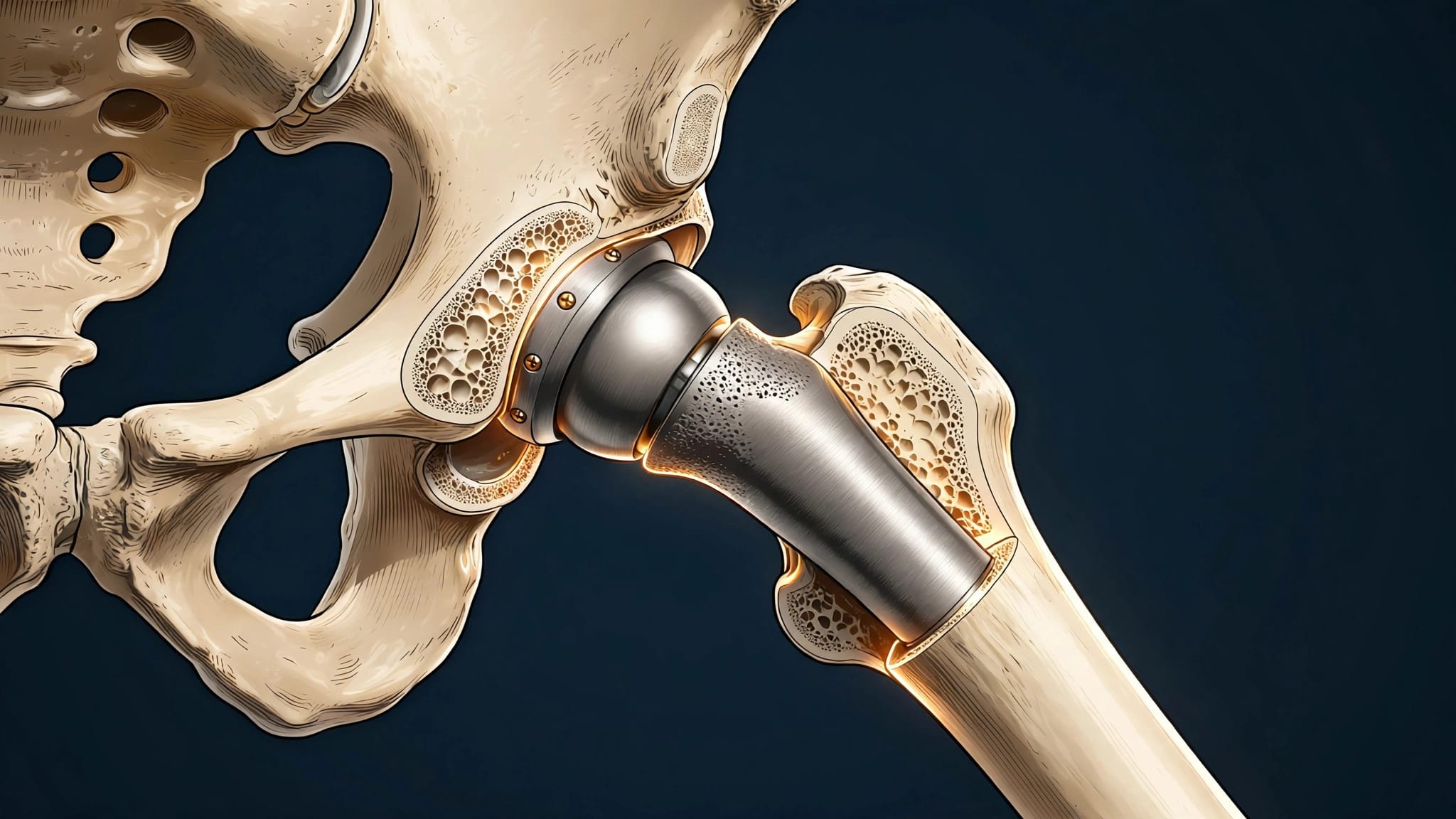
A total hip replacement usually includes a socket component, a femoral stem, a femoral head, and a liner. SuperPATH describes the access used to place those components. It doesn't automatically mean the implant is metal-free or allergy-safe.
If you're comparing techniques, review the differences in SuperPATH versus direct lateral hip replacement. The approach and the implant should be discussed as two connected but separate parts of surgical planning.
Why the implant materials still matter
Modern hip replacements may use cobalt-chromium alloys, titanium alloys, ceramic, stainless steel, and polyethylene. Cobalt-chromium components can contain cobalt, chromium, and nickel, which are the metals most often discussed when patients report contact allergies.
A surgeon may discuss a ceramic femoral head with a highly cross-linked polyethylene liner and titanium-based components when reducing cobalt-chromium exposure makes sense. Still, the exact combination depends on the implant system and your clinical needs. A ceramic head also doesn't mean the entire replacement contains no metal.
Metal Allergy Hip Implants: What Patients Should Know
Metal hypersensitivity after total hip replacement is considered uncommon and remains difficult to prove. Medical literature generally treats it as a diagnosis of exclusion , meaning doctors first investigate infection, loosening, instability, implant position, fracture, and other causes.
The word "allergy" can also describe different immune responses. A skin reaction to nickel jewelry may show contact sensitivity, but it doesn't prove that a hip implant will cause an inflammatory reaction inside the joint.
Possible symptoms of metal hypersensitivity
Reported symptoms include persistent pain, swelling, stiffness, fluid around the joint, wound problems, and a rash or dermatitis near the hip. Some patients may have poor function without any visible skin reaction.
These symptoms overlap with more common complications. For example, infection can cause pain and swelling, while loosening can cause activity-related discomfort. Instability, impingement, malposition, wear debris, and soft-tissue irritation can produce similar complaints.
As a result, symptoms alone can't confirm metal allergy hip implants as the cause. A careful evaluation matters more than a single symptom or an internet checklist.
Known contact allergy deserves a clear discussion
Tell your surgeon about reactions to jewelry, watches, belt buckles, eyeglasses, dental materials, or previous orthopedic implants. Describe what happened, how quickly it began, whether a clinician confirmed it, and how it was treated.
Bring old allergy evaluations, patch-test reports, operative notes, implant cards, and records from prior joint surgery when available. The exact metal and the type of reaction are more useful than writing "metal allergy" on a general intake form.
How Doctors Evaluate a Possible Implant Reaction
No test can reliably predict every reaction to a hip implant. The American Academy of Orthopaedic Surgeons, through OrthoInfo, states that no single test is widely accepted for diagnosing metal implant hypersensitivity.
Testing may still help in selected situations. Your orthopedic surgeon may coordinate with an allergist or dermatologist when your history suggests contact allergy, especially if the result could affect the implant discussion.
Patch testing and blood-based allergy tests have limits
Patch testing places allergens such as nickel, cobalt, or chromium on the skin. Clinicians commonly check the skin at about 48 hours and again at 72 to 96 hours or later.
A positive patch test shows that your skin reacts to that substance. It doesn't recreate the environment inside a hip joint. The immune cells and conditions involved in a skin reaction differ from those around an implanted device. Patch testing also doesn't consistently predict who will develop implant-related symptoms.
Lymphocyte transformation testing, or LTT, uses a blood sample to measure how certain lymphocytes respond to allergens in the laboratory. It may provide additional information, but researchers have not established it as a definitive benchmark. Routine testing before joint replacement isn't recommended for every patient.
Blood cobalt and chromium tests answer a different question. They can help identify metal exposure or debris, particularly in certain implant situations, but they don't prove an allergic reaction. Metal artifact reduction sequence MRI can also help assess tissue reactions related to metal debris, but it isn't a standalone allergy test.
Doctors must rule out infection and mechanical problems
After hip replacement, chronic pain requires a broad evaluation. Doctors may review your symptoms, examine your walking pattern and hip movement, obtain X-rays, and order blood tests such as erythrocyte sedimentation rate and C-reactive protein.
If infection remains possible, joint aspiration may help analyze fluid for signs of infection. Imaging can help assess loosening, component position, fracture, wear, or changes in the surrounding bone. The evaluation may also consider instability, dislocation, impingement, tendon problems, and nerve irritation.
Only after these causes receive appropriate attention should metal hypersensitivity move higher on the list. This approach prevents a positive skin test from distracting everyone from a treatable infection or mechanical complication.
Implant Materials and Alternatives to Discuss
Patients researching metal allergy hip implants often want one guaranteed material choice. No universal implant works for every patient with a reported metal sensitivity. The right discussion focuses on which materials are present, which parts can be changed, and how those choices affect fixation and wear.
Ask about every component, not only the visible head
Ask your surgeon to explain the materials in the femoral stem, acetabular shell, femoral head, liner, coatings, and any screws. A component described as ceramic may still work with a metal stem or shell.
You can also ask whether the planned bearing surface uses ceramic against polyethylene, ceramic against ceramic, or metal against polyethylene. Each combination has different considerations related to wear, fracture risk, stability, and the surgeon's experience.
The goal is usually to reduce exposure to metals linked to your documented reaction while preserving a stable, durable reconstruction. Material selection should fit the whole operation, not a single allergy label.
Discuss alternatives without expecting a promise
For some patients, a ceramic head with highly cross-linked polyethylene and titanium-based components may reduce cobalt-chromium exposure. However, availability varies by implant platform, and a surgeon may recommend a different combination because of bone quality, anatomy, prior surgery, or stability concerns.
Ask how the proposed implant addresses your allergy history and what evidence supports that choice. Also ask whether an allergist's input would change the plan. A transparent conversation is more useful than a promise that any implant is completely risk-free.
When reviewing a surgeon, look for someone who explains both the approach and the implant plan in terms you understand. Patients in Southwest Florida can review Dr. Peter Ameglio's orthopedic surgery expertise before scheduling a consultation.
After Surgery: Which Symptoms Need Attention
Early soreness, swelling, stiffness, and changes in walking can occur after hip replacement. Recovery also varies with your health, activity, pain control, physical therapy plan, and the complexity of surgery.
A suspected metal reaction usually doesn't explain every uncomfortable symptom during the first days or weeks. Your surgical team should know about symptoms that persist, worsen, or appear after an initial period of improvement.
Symptoms that need prompt medical review
Contact your surgical team promptly if you develop increasing pain, swelling, warmth, redness, wound drainage, fever, chills, or a new rash around the hip. Also report worsening stiffness, a sudden decline in walking ability, or pain that doesn't follow the expected recovery pattern.
These signs don't diagnose infection or allergy. They indicate that your surgeon should assess the hip and decide whether testing or treatment is needed.
Symptoms that require urgent care
Seek urgent medical attention for sudden severe hip pain, a visible change in leg position, or an inability to bear weight. These symptoms can occur with dislocation, fracture, or another acute complication.
Calf swelling or pain, sudden shortness of breath, and chest pain also require urgent evaluation because they can signal a blood clot or pulmonary embolism. Waiting for a routine appointment isn't appropriate for those symptoms.
Questions to Bring to Your Orthopedic Consultation
Writing down your questions can make the appointment more productive. Consider asking:
- Which implant materials and coatings are in the planned hip replacement?
- Does any component contain nickel, cobalt, or chromium?
- Which implant parts are ceramic, titanium, or polyethylene?
- Does my documented reaction change the recommended implant or surgical plan?
- Would an allergist or dermatologist evaluation add useful information?
- What can patch testing or LTT tell me, and what can't those tests prove?
- How will you check for infection, loosening, instability, or implant malposition if pain continues?
- Which symptoms should prompt a same-day call, an urgent visit, or emergency care?
Bring your allergy records and a list of prior reactions. If another surgeon has recommended a different implant, bring that information as well. Clear records help the orthopedic team compare options without relying on memory.
Conclusion
SuperPATH describes a minimally invasive surgical approach, not a particular implant material. Patients concerned about metal allergy hip implants should discuss their documented reactions, bring prior records, and ask for a clear explanation of every component.
Metal hypersensitivity is uncommon and difficult to confirm. Patch testing and blood-based tests have limits, so persistent symptoms after surgery require evaluation for infection, loosening, instability, and other complications before allergy becomes the main explanation. The best surgical plan connects the approach, implant materials, and your medical history through a careful conversation with your orthopedic surgeon.
ADDITIONAL ARTICLES