August 27, 2026
Hip Replacement Seroma: Signs, Treatment, and When to Call
A new lump or pocket of swelling near a hip incision can feel alarming, especially after you have worked hard through the first days of recovery. A hip replacement seroma is often treatable, but any new or enlarging fluid collection deserves a prompt call to your surgical team.
Some swelling, bruising, and warmth are expected after hip surgery. However, the pattern matters. A soft area that grows, feels tight, or begins draining needs professional assessment rather than watchful waiting at home.
What a Seroma Is After Hip Replacement
A seroma is a collection of clear, watery fluid that gathers in the soft tissue after surgery. It often develops near the incision, usually above the deeper fascia that covers the muscles around the hip.
Your body produces fluid as part of healing. Surgery creates a space between tissues, and that space can temporarily fill with serum, the pale fluid portion of blood. Most small collections gradually reabsorb as the tissues heal.
When a seroma usually appears
A hip replacement seroma often appears within the first two to four weeks after surgery. Sometimes a patient first notices it after activity increases or when the initial post-operative swelling starts to settle.
The area may look raised or puffy near the incision. It can feel soft, squishy, or movable under the skin. Some people notice a fluid-like shift when they change position.
A collection can also develop earlier or later, so timing alone does not confirm the diagnosis. Your surgeon needs to consider the wound's appearance, pain level, activity changes, medications, and other symptoms.
Seroma is not the same as normal swelling
Normal post-operative swelling is usually broad and gradual. It may involve the hip, thigh, knee, ankle, or foot. It often increases later in the day and improves with rest, elevation, and the care plan your surgeon provided.
A seroma tends to feel more localized. Rather than a generally puffy thigh, you may notice a distinct pocket near the incision. Still, the two can occur together, which is why an in-person assessment may be needed.
Signs of a Hip Replacement Seroma
The most common sign is a visible or palpable bump near the incision. The skin may feel tight, and the spot can be mildly sore or tender when clothing rubs against it.
Some seromas cause little discomfort. Others make bending, walking, or lying on that side more uncomfortable because the skin and soft tissue feel stretched.
Changes around the incision
Call the surgical office if you notice a new, enlarging, or painful fluid-filled area. Contact them even if the incision appears closed, since fluid can collect below the skin.
Other changes that merit a call include:
- A soft, raised swelling near the incision that increases over hours or days.
- New clear, yellowish, pink-tinged, or bloody drainage from the wound.
- Skin that becomes increasingly warm, red, firm, or tender around the collection.
- Pain that rises instead of slowly easing during recovery.
- A feeling of pressure that makes normal movement harder.
Reviewing hip replacement swelling warning signs can help you separate the usual recovery ups and downs from changes that need attention.
Warning signs that need urgent care
A seroma itself may be sterile, meaning no infection is present. Yet fluid near a prosthetic hip can delay wound healing and may raise concern for infection. Do not wait for a routine follow-up if you develop fever, chills, spreading redness, worsening pain, drainage, or wound opening.
Seek urgent medical assessment for a fever, rapidly spreading redness, cloudy or foul-smelling drainage, severe pain, or an incision that separates. New calf swelling or calf pain can point to a blood clot rather than a fluid pocket.
Shortness of breath, chest pain, fainting, or coughing up blood can signal a pulmonary embolism. Call emergency services right away for these symptoms.
Why the Surgical Team Needs to Assess It
A hip replacement seroma can resemble several other post-operative problems. The appearance alone cannot reliably tell you what type of fluid is present or whether the joint is at risk.
Although a small collection can resolve without a procedure, a growing one may place tension on the incision. If it begins draining, bacteria can potentially enter through the wound and threaten the joint replacement.
Hematoma, infection, and blood clot concerns
A hematoma is a blood collection, often associated with more bruising, swelling, pressure, or pain. It may form soon after surgery, although its symptoms can overlap with a seroma.
An infection may cause increasing warmth, redness, severe or worsening pain, fever, drainage, or a general feeling of illness. Early infection symptoms can be subtle, so a wound that is moving in the wrong direction deserves attention.
A deep vein thrombosis, or DVT, causes swelling and pain in the leg rather than a small fluid pocket near the incision. Because a blood clot can travel to the lungs, calf symptoms and breathing changes always need urgent assessment.
A fluid collection beside a new hip implant is not something to puncture, squeeze, massage, or drain at home.
How Surgeons Evaluate Post-Operative Fluid Collections
Your orthopedic team will first ask when you noticed the area and how it has changed. They will check the incision, feel the swelling, assess tenderness and warmth, and compare both legs.
Bring a clear timeline. Mention new medications, blood thinners, a recent fall, an increase in walking, a change in therapy, or any drainage. These details help the team decide how quickly you need to be seen.
Imaging and fluid testing
Ultrasound can show whether swelling contains fluid and can help estimate its size and depth. It can also guide a needle if the surgeon decides aspiration is appropriate.
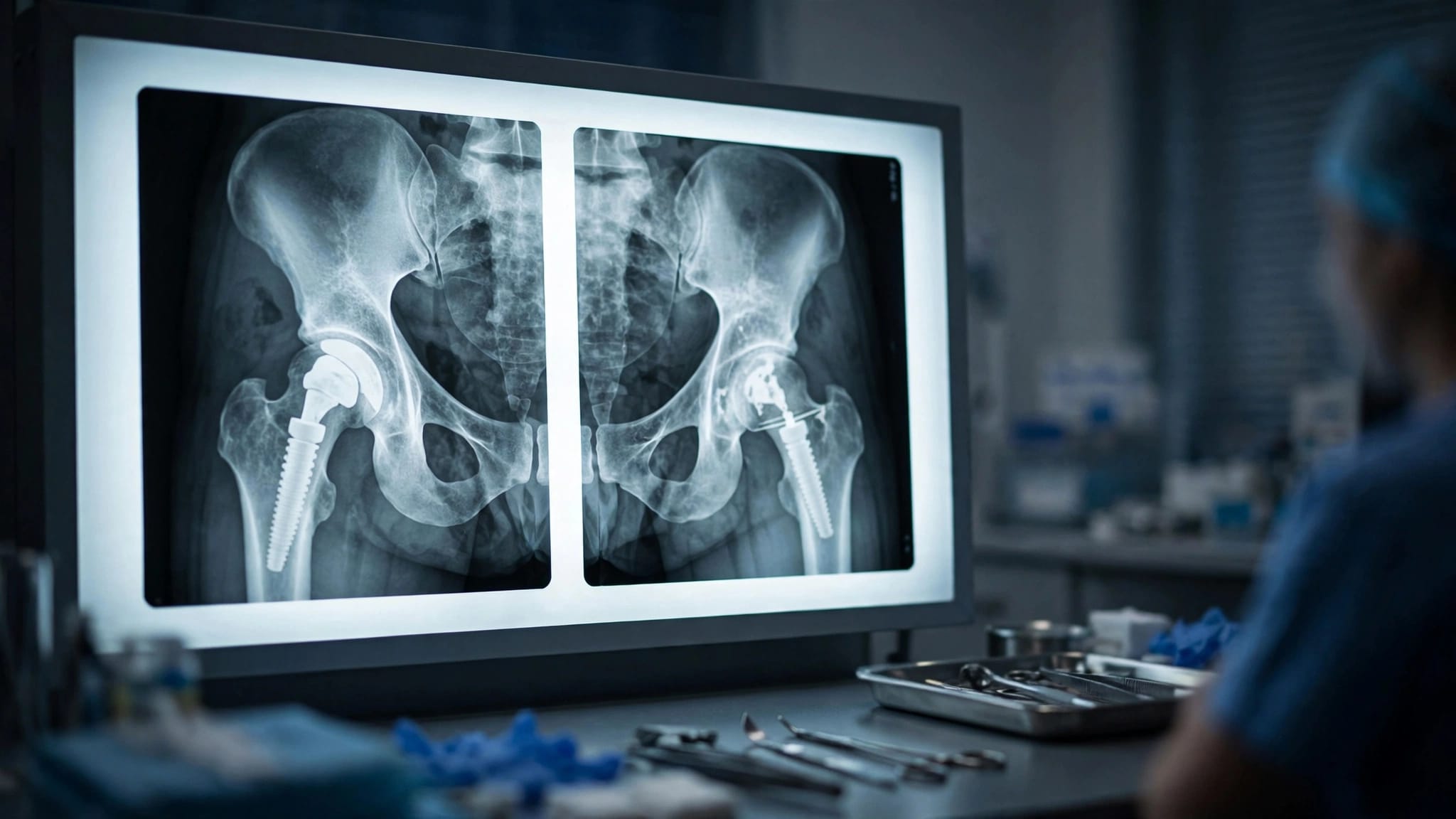
In some cases, the team may use X-rays or CT imaging to assess the hip and surrounding tissue. They may also order blood work when infection is a concern.
If a clinician withdraws fluid, they may examine its appearance and send it for laboratory testing or culture. Clear fluid is more consistent with a seroma, while bloody fluid may suggest a hematoma. Cloudy fluid or fluid that contains bacteria needs a different response.
Why aspiration requires sterile technique
Needle aspiration can relieve pressure and help identify the problem. However, every needle puncture carries some infection risk, which matters even more around an artificial joint.
For that reason, a surgeon weighs the size, symptoms, wound condition, and likelihood of infection before recommending aspiration. A fluid pocket that refills may need repeat evaluation rather than repeated treatment without a plan.
Treatment Options for a Seroma After Hip Surgery
Treatment depends on the collection's size, symptoms, location, and effect on the incision. Your surgeon also considers whether there are signs of infection, bleeding, or poor wound healing.
A small, painless collection with an intact incision may only need monitoring. Many seromas gradually disappear as your body absorbs the fluid.
Observation and activity adjustments
Your surgical team may recommend temporary changes to activity if movement or overexertion seems to worsen swelling. They may also advise elevation, cold therapy, or compression based on your incision and recovery stage.
Do not add a compression garment or change wound care on your own. Pressure that is helpful for one patient can irritate a fresh incision or conflict with a surgeon's instructions for another.
Keeping a daily record of swelling size, pain, drainage, temperature, and walking tolerance can be useful. A hip recovery symptom journal gives you a practical way to track changes before you speak with the office.
Aspiration and compression
For a larger, uncomfortable, or enlarging hip replacement seroma, the surgeon may recommend sterile needle aspiration. Removing fluid can reduce tension and allow the incision to heal more comfortably.
Some seromas refill after aspiration. If that happens, the team may repeat aspiration, use a compression dressing, or modify your activity plan. They may also test the fluid if infection remains a concern.
Aspiration does not always mean there is an infection or a major complication. It is one tool for diagnosis and symptom relief, used when the likely benefit outweighs the risks.
Drains or surgery for persistent cases
A persistent or recurrent collection may need a temporary drain. The goal is to prevent fluid from repeatedly building up while the tissue layers heal together.
Surgery is usually reserved for collections that remain despite other care, form a thick capsule, threaten the wound, or raise concern for infection. If infection is found, treatment can involve additional procedures and antibiotics directed by the surgical team.
This stepwise approach protects both the incision and the hip implant. Early reporting gives the surgeon more options before the problem becomes harder to manage.
Protecting the Incision While You Wait for Guidance
Until your team tells you otherwise, leave the incision and dressing alone. Do not press on the bump, insert a needle, apply creams near the wound, or try to drain fluid through the incision.
Keep track of whether the collection is stable, shrinking, or growing. A photo taken once daily in the same lighting can help document a visible change, but do not let photo tracking delay a call when symptoms worsen.
Movement should match your recovery plan
Walking supports recovery, but doing too much too soon can increase normal swelling and soreness. Follow the schedule given by your surgeon and physical therapist rather than testing the hip through a long walk or extra exercises.
If swelling reliably worsens after activity, report that pattern to the office. Guidance on safe walking after hip replacement can also help you recognize when recovery activity needs adjustment.
Continue medications exactly as prescribed unless your treating clinician gives different instructions. This includes blood clot prevention medicine, which should never be stopped because of swelling without medical guidance.
Questions to Ask Your Orthopedic Surgeon
A clear conversation can reduce uncertainty and help you understand the next step. Write down your questions before the visit or phone call, especially if a caregiver will be helping with wound checks.
Consider asking:
- Does this look like a seroma, a hematoma, infection, or another cause of swelling?
- Do I need imaging, blood work, or fluid testing?
- Is observation reasonable, or does the collection need aspiration?
- Should I change my walking, therapy, elevation, or cold therapy routine?
- What drainage, pain, redness, or swelling changes should prompt an urgent call?
Your first follow-up visit is also a good time to discuss wound healing and activity limits. Knowing what happens at a hip replacement follow-up can make it easier to arrive prepared.
A Prompt Call Helps Protect Your Recovery
A hip replacement seroma is often manageable, particularly when the incision remains closed and the collection is addressed early. However, an enlarging bump, drainage, fever, spreading redness, worsening pain, calf swelling, or shortness of breath needs prompt medical attention.
Your surgical team knows the details of your procedure and can decide whether monitoring, aspiration, imaging, or further treatment is appropriate. Reporting a change early protects the wound, the implant, and your progress toward comfortable movement.
ADDITIONAL ARTICLES