August 31, 2026
Ceramic vs Metal Implants: Hip Replacement Materials Compared
Choosing a hip replacement can feel overwhelming when the discussion turns to implant materials. Ceramic vs metal implants is an important comparison, but the answer rarely comes down to one material being better for every person.
Modern hip replacements combine several materials, and each part has a separate job. Your surgeon's goal is a stable, smooth-moving hip that fits your body and supports the life you want to return to.
How Hip Replacement Components Work Together
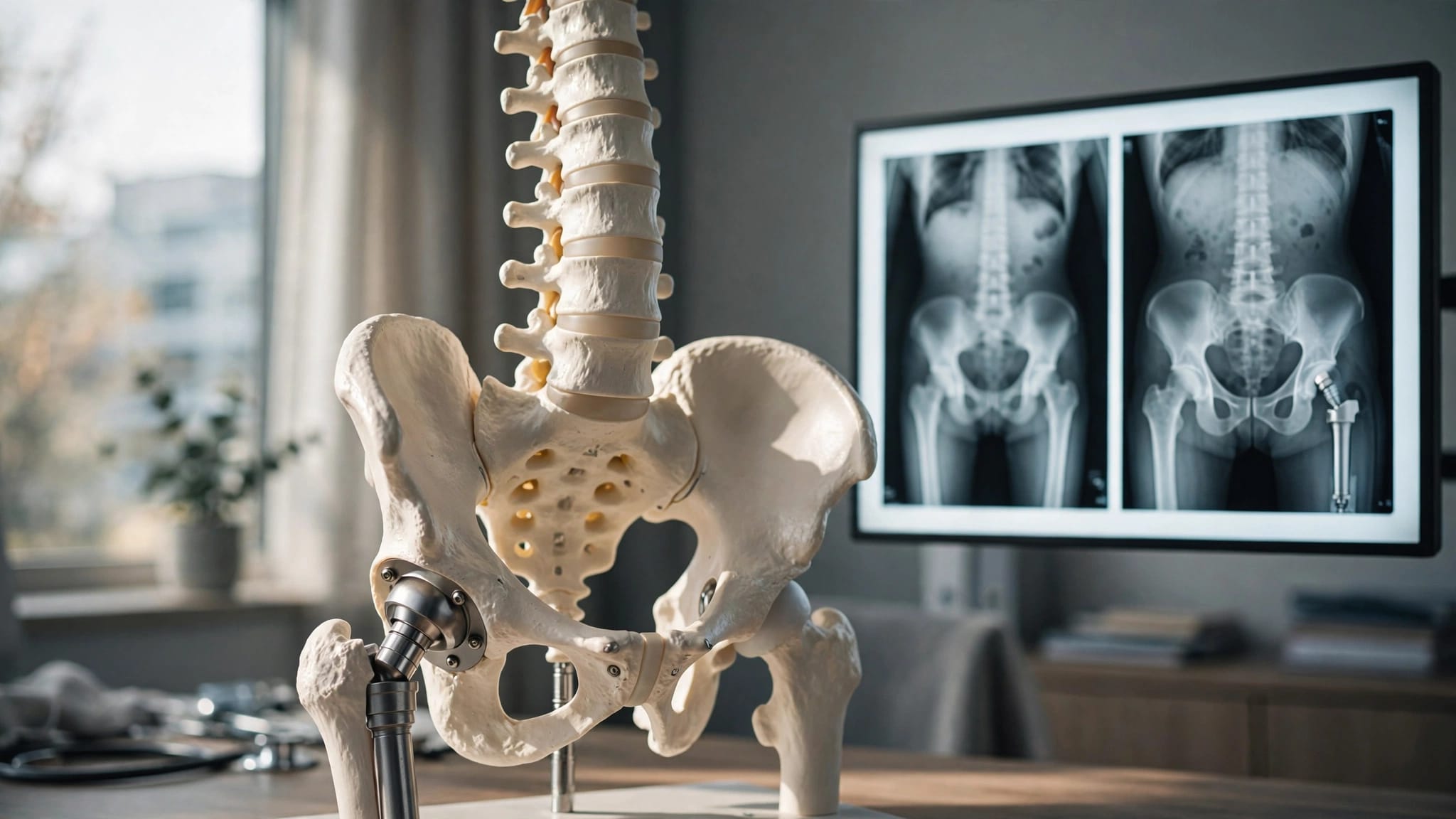
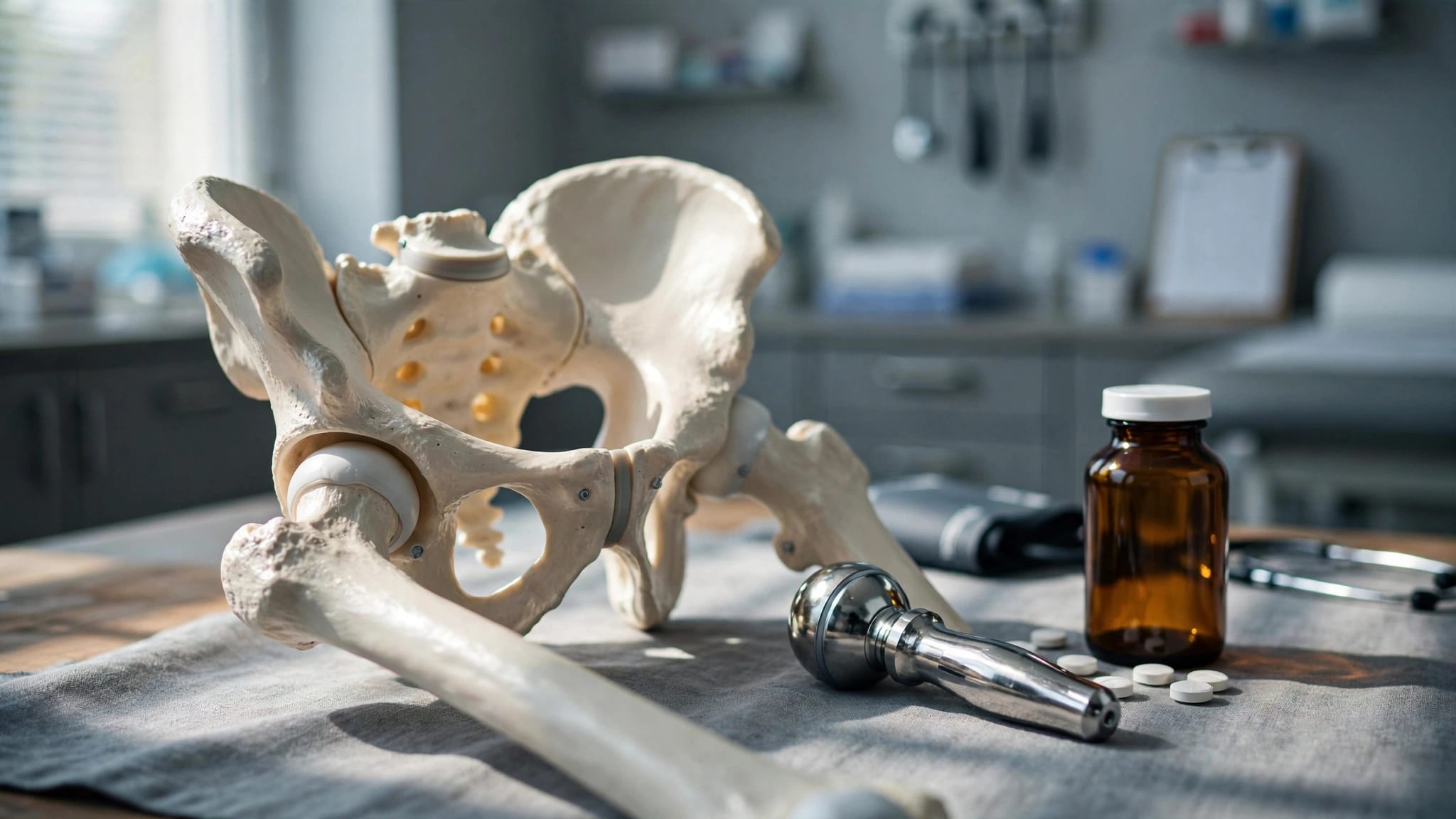
A total hip replacement replaces the worn ball-and-socket surfaces of the hip. The new joint usually includes a stem in the thighbone, a ball at the top of that stem, a socket shell in the pelvis, and a liner inside the shell.
The material discussion often centers on the bearing surface , where the ball moves against the liner. That moving pair affects wear, friction, and long-term performance.
The ball, liner, shell, and stem have different roles
The femoral ball may be ceramic or metal, often cobalt-chromium alloy. The socket liner is commonly highly cross-linked polyethylene, a durable medical plastic. Some hips use a ceramic liner instead.
Meanwhile, the socket shell and stem are often titanium alloys. Titanium supports bone growth onto the implant in many cementless designs. Therefore, a patient with a ceramic ball still has metal elsewhere in the replacement.
Material names can sound simpler than the implant itself
You may hear terms such as ceramic-on-polyethylene or metal-on-polyethylene. Those phrases describe the ball and liner, rather than every part placed during surgery.
Ceramic-on-ceramic hips also exist, although they are used less often in the United States than ceramic or metal heads paired with polyethylene. Metal-on-metal bearings have declined sharply because of concerns about wear debris and metal ions.
Ceramic vs Metal Implants: The Main Differences
When comparing ceramic vs metal implants, patients often focus on durability. Both materials have decades of clinical use, and both can perform well when paired with the right implant design and surgical plan.
The choice involves trade-offs. Your surgeon considers the whole construct, not only the material of the ball.
Ceramic femoral heads resist scratches and wear
Ceramic is extremely hard and has a smooth surface. Because it resists scratching, a ceramic head may create less wear against a polyethylene liner over time. Lower wear can matter for people expected to place many years of use on a replacement.
Modern ceramic heads are made for medical use and are far stronger than household ceramic items. Still, ceramic can fracture under unusual circumstances. That complication is rare, but it is a real material-specific risk.
Ceramic components can also make an audible squeak in a small number of patients. A squeak does not always mean the implant has failed, yet it deserves a conversation with your orthopedic surgeon.
Metal heads have a long record of reliable use
Cobalt-chromium femoral heads are tough, widely available, and have a long history in total hip replacement. They work well with highly cross-linked polyethylene liners and remain a common option.
Metal heads can scratch more easily than ceramic if particles enter the joint. In addition, metal wear or corrosion can release ions in certain designs. The greatest concern has involved metal-on-metal hip replacements, which are now far less common.
A metal head on polyethylene does not carry the same risk profile as a metal-on-metal bearing. However, every implant has a connection between components, and surgeons consider the design of that connection as part of the decision.
Wear, Friction, and Long-Term Implant Performance
Hip replacements do not wear out on a schedule. Many last for decades, yet the result depends on implant fixation, component position, body weight, activity, bone quality, and the underlying diagnosis.
Ceramic and metal heads both perform well with modern polyethylene. The difference in wear between materials may matter more for some patients than others.
Polyethylene has changed modern hip replacement
Older polyethylene liners wore faster than current highly cross-linked polyethylene. Manufacturers developed this material to improve wear resistance, and it is now a standard part of many hip replacements.
For that reason, ceramic-on-polyethylene and metal-on-polyethylene are both common choices. The liner's quality, thickness, and placement can affect performance as much as the head material.
A hip implant is a system, not a single material. A well-matched ball and liner cannot overcome poor fixation or poorly positioned components.
Durability includes more than the bearing surface
A stable implant must stay fixed to bone. Some implants use bone cement, while others have surfaces designed for bone to grow into them. You can learn more about cemented versus cementless hip replacement when discussing how the implant will be secured.
Dislocation risk also matters. In some cases, a surgeon may recommend a larger head or a dual mobility design to improve stability. These dual mobility hip implants use a mobile polyethylene liner inside a metal socket.
Which Patients May Benefit From Each Material?
There is no universal answer to ceramic vs metal implants. General evidence can help frame the discussion, but it cannot replace an examination, imaging review, and a surgeon's judgment.
The best implant material depends on your age, activity level, anatomy, surgical approach, implant design, and surgeon judgment. Bone strength, prior surgery, spine stiffness, and dislocation risk may also shape the recommendation.
Age and activity influence the durability discussion
Younger patients may live with a hip replacement for many decades. Because of that, surgeons often pay close attention to wear characteristics and the chance of future revision surgery.
However, age alone does not choose the implant. A healthy, active 75-year-old and a sedentary 55-year-old may have very different needs. Walking, swimming, golf, work demands, and impact activities should all be part of the conversation.
Activity after surgery matters, but high-impact exercise is not the only source of stress on an implant. Body mechanics, falls, and bone health also affect long-term outcomes.
Anatomy and stability can guide the implant plan
Some patients have bone loss, a prior hip operation, hip dysplasia, or a spine condition that changes pelvic movement. These details can change the preferred cup size, head size, fixation method, and bearing option.
Your surgeon also selects components that fit safely through the planned surgical approach. Hip replacement surgical approaches differ in how they access the joint and handle nearby muscles and soft tissues.
Material is one part of that larger plan. A well-positioned, stable replacement suited to your anatomy is more important than choosing a material based on a single online comparison.
Questions to Ask During a Hip Replacement Consultation
A useful consultation should leave you with a clear reason for the recommended implant. Ask your surgeon to explain the components in plain language and how the plan fits your goals.
Bring a short list of questions, especially if you have read conflicting information about ceramic and metal bearings.
Ask about the exact bearing and fixation plan
These questions can help guide the conversation:
- What material will the femoral head and liner be, and why do you recommend that pairing?
- Will my stem and cup use cement, press-fit fixation, or a combination?
- Do my bone quality, anatomy, or activity plans affect the material choice?
- Is there any reason I might benefit from a larger head or dual mobility implant?
- What are the likely risks and expected lifespan of this implant in my case?
You can also review these questions to ask before choosing a hip surgeon before an appointment.
Ask about the surgeon's experience with the proposed design
Surgeons develop experience with particular implant systems and approaches. That experience matters because accurate sizing and component placement affect stability, leg length, comfort, and wear.
It is reasonable to ask how often the surgeon performs hip replacements, which implant system they recommend, and what follow-up care looks like. A direct answer helps you make an informed decision without treating the material choice as a sales pitch.
Recovery and Follow-Up Matter After Surgery
The recovery plan does not usually change dramatically because you have a ceramic or metal femoral head. Most patients focus on pain control, walking safely, protecting the incision, physical therapy, and regaining strength.
Your individual instructions may differ based on the approach, implant stability, and medical history. Follow the weight-bearing and movement guidance your surgical team gives you.
Early recovery focuses on safe movement
A new hip needs time for soft tissues to heal and for you to rebuild confidence with walking. Use a walker, cane, or other device for as long as your surgeon or therapist recommends.
Call the office promptly for increasing redness, drainage, fever, calf pain, chest pain, shortness of breath, or a sudden change in hip function. These symptoms need medical attention regardless of implant material.
Long-term monitoring protects your investment
Regular follow-up visits allow your surgeon to check alignment, fixation, and the condition of the surrounding bone. X-rays can identify changes before they cause major symptoms.
If pain develops years after surgery, don't assume it is normal wear. Infection, tendon problems, spine issues, loosening, and instability can all cause hip-area pain. A focused evaluation can identify the source.
The Right Hip Implant Is the One That Fits Your Situation
Ceramic and metal femoral heads both have a place in modern total hip replacement. Ceramic may offer excellent scratch resistance and low wear, while metal provides durable, proven performance with commonly used polyethylene liners.
The strongest choice comes from matching the full implant system to your body, goals, bone quality, and stability needs. A personalized surgical plan matters more than a simple material label.
Discuss ceramic versus metal options with your orthopedic surgeon, then choose based on the recommendation that makes sense for your own hip.
ADDITIONAL ARTICLES